
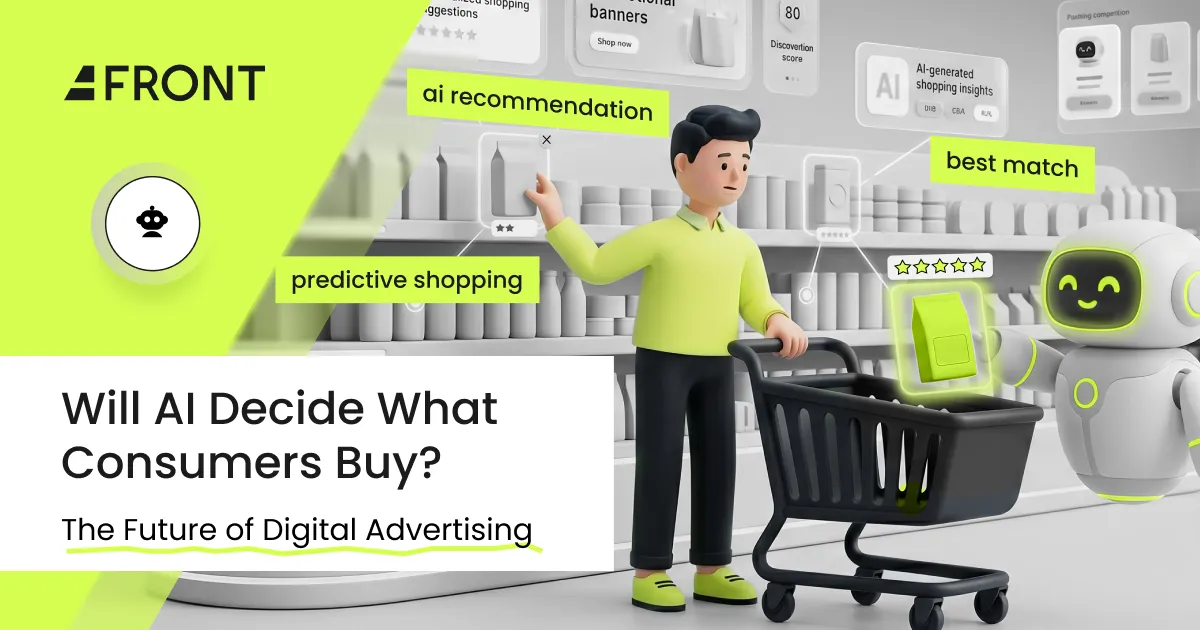
Shopping online used to involve a familiar sequence.
Search. Scroll. Compare. Open another tab. Check reviews. Forget why you opened the first tab. Eventually, buy.
AI is starting to compress that journey.
Instead of showing consumers a long list of possibilities, AI can interpret what they want, compare options, explain why a product might fit and increasingly help move the shopper toward a transaction.
That changes more than ecommerce UX. It changes what advertising has to do.
When an AI system sits between a consumer and thousands of possible products, visibility is no longer only about appearing on the right page. Brands need to become relevant enough to enter the recommendation itself.
From Search Results to AI Recommendations
Google’s recent push into agentic commerce gives us a useful preview.
At Google Marketing Live 2026, the company expanded commerce features that can keep more of the shopping journey within its ecosystem. Merchants participating in the Universal Commerce Protocol can support checkout from AI experiences, while similar commerce capabilities are extending into YouTube and other Google surfaces.
Google is also experimenting with AI-driven ad experiences that can explain products, surface relevant offers and let consumers interact with business-specific agents inside ads.
That is a meaningful change.
Traditional search advertising competes for the click. Agentic advertising can compete for the recommendation — and potentially the transaction.
Consider someone looking for a new TV.
A conventional search might produce sponsored links, shopping results, reviews and organic listings. The consumer does the comparison.
An AI-assisted journey could interpret the budget, room size and viewing habits, narrow hundreds of products to a few choices and explain the differences.
The consumer may still make the final call. But AI has already shaped the shortlist.
For advertisers, getting onto that shortlist could become extremely valuable.
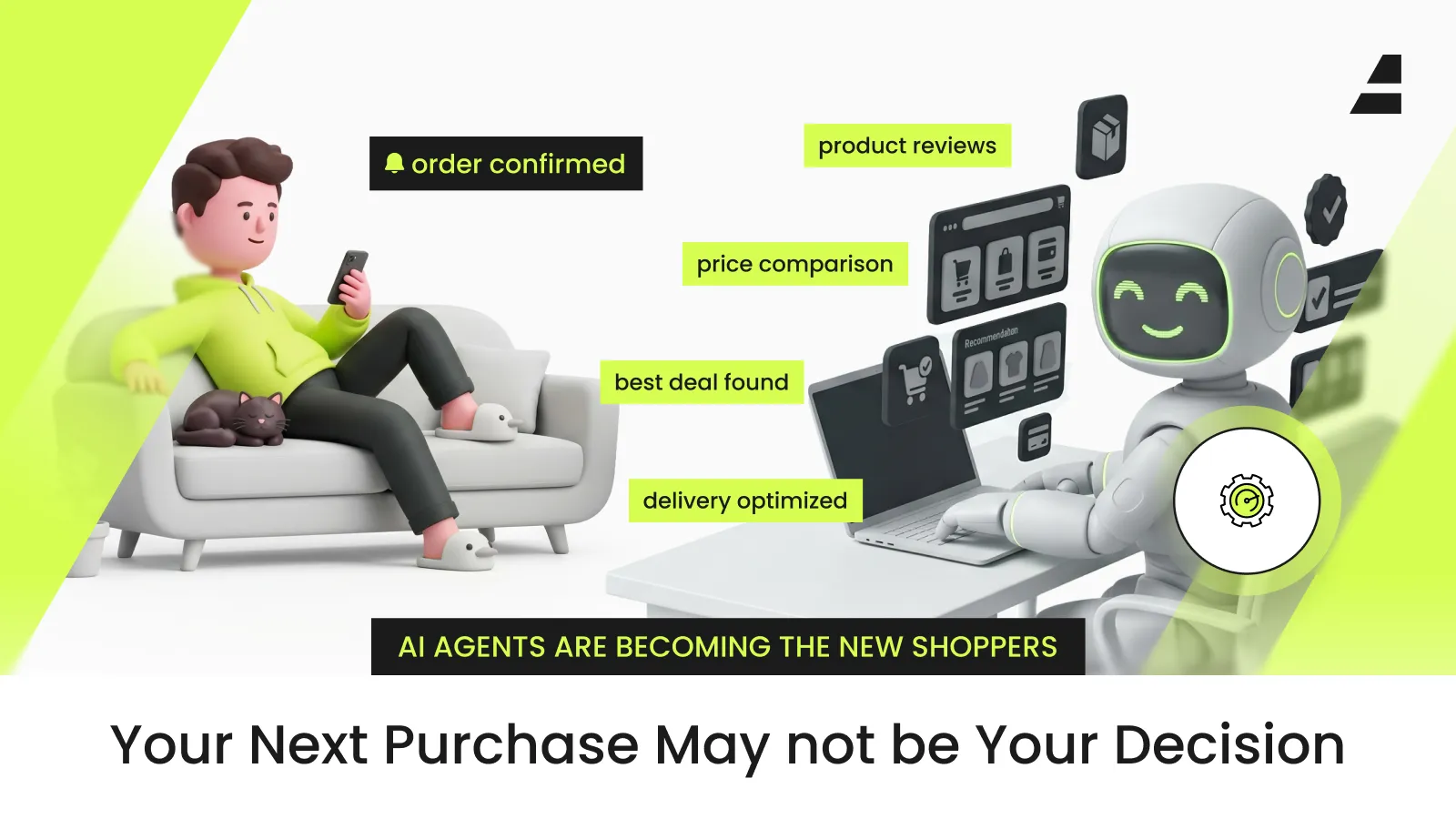
Artificial intelligence analyzing contextual and behavioral signals for programmatic advertising optimization.
Advertising Is Moving Closer to the Decision
Programmatic advertising has spent years improving its ability to identify audiences and optimize delivery.
AI pushes optimization further down the funnel.
The question becomes less about who might click this ad? and more about what information, offer or creative is most likely to help this particular consumer make a decision?
Google’s Direct Offers beta is an interesting example. Merchants can provide discounts and incentives that AI can match with relevant users and situations. AI-generated shopping formats can also provide additional product explanations for purchases that require more consideration.
That creates a different kind of ad experience.
The creative does not necessarily have to shout louder. It has to answer better.
Price, availability, product attributes, context, offers, brand signals and consumer intent can all become inputs into the advertising decision.
For performance marketers, that opens a powerful opportunity: moving from static targeting rules toward advertising that adapts much closer to the moment of consideration.
The Algorithm Still Needs Good Signals
There is a temptation to treat agentic commerce as an AI problem.
For advertisers, it is just as much a data problem.
An AI system cannot magically make a weak offer competitive. It cannot turn unclear product information into a compelling proposition without making assumptions. And optimization becomes much less useful when the signals feeding it are poor.
This is where the fundamentals of digital advertising become more important, not less.
Brands need reliable audience signals. They need quality inventory. They need clear product and campaign data. They need creative that gives people a reason to care. And they need measurement that shows what happened after exposure.
At Afront, this principle already shapes how we approach programmatic advertising.
Our platform combines algorithmic targeting, granular campaign controls and real-time optimization across formats including CTV, mobile, video and display. Afront reaches more than 300 million unique users and delivers over 2 billion ad impressions each month across a global ecosystem.
Scale matters.
Knowing what to do with that scale matters more.
AI May Change What “Creative” Means
Creative teams should pay attention to agentic advertising for another reason.
The ad itself is becoming less fixed.
Imagine two consumers considering the same laptop. One cares about battery life because they travel constantly. The other wants enough processing power for video editing.
Why should they receive exactly the same message?
AI-driven advertising makes it easier to adapt product information, messaging and offers around context. Google is already introducing shopping ad experiences where AI can provide explanations about products and respond to additional questions.
This makes creative strategy more dynamic.
A strong master concept still matters. Brand identity still matters. Human taste definitely matters.
But marketers can build a larger system around that creative idea, giving algorithms more relevant assets and signals to work with.
At Afront, we see targeting and creative as connected. Precision can get a brand onto the right screen at the right moment. Creative has to make that moment count.
AI makes that relationship even tighter.
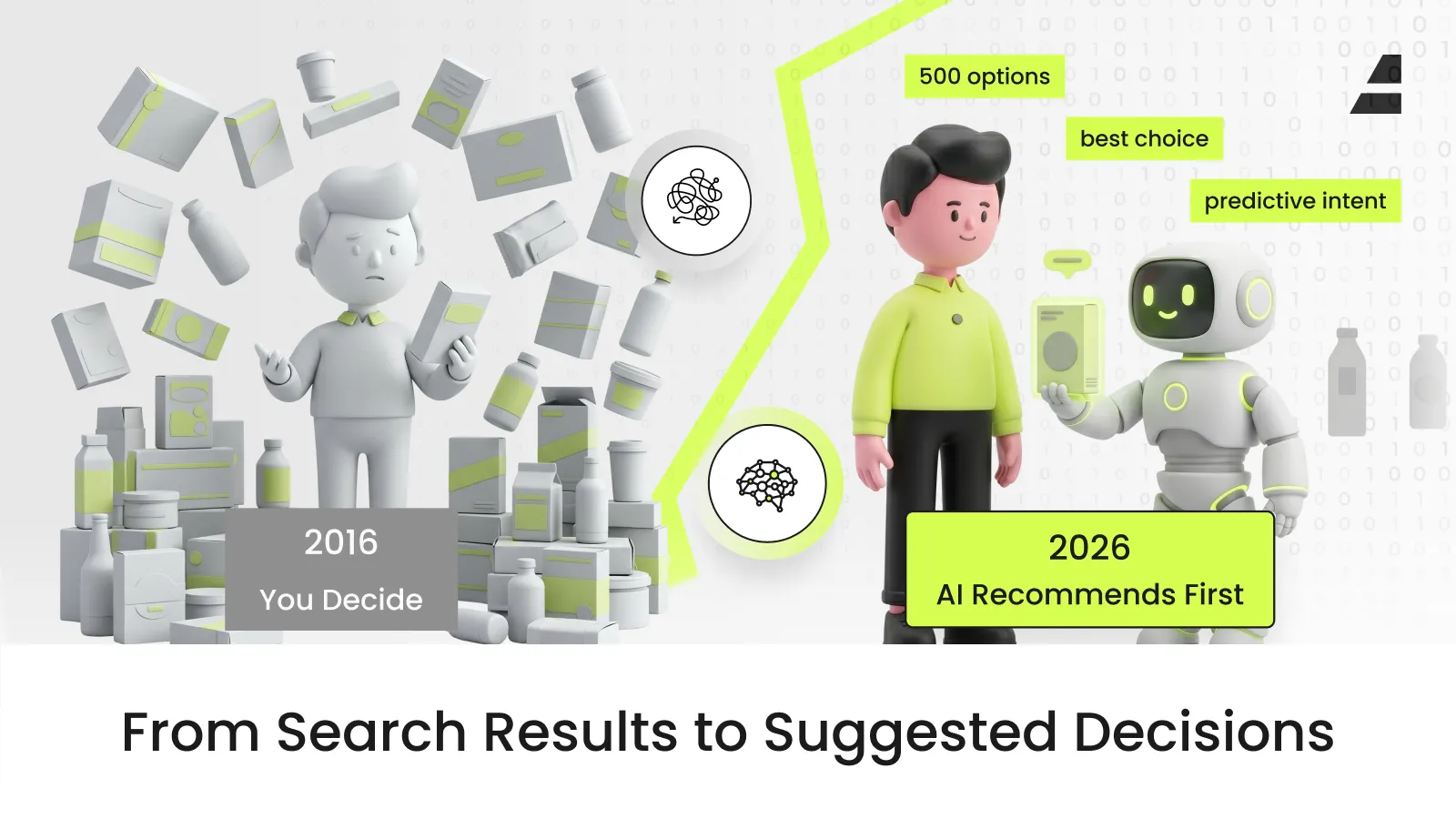
Evolution of digital advertising from keyword-based search to AI-powered predictive recommendations.
Will Consumers Actually Let AI Shop for Them?
This is where predictions need some restraint.
The technology is moving quickly. Consumer behavior may move differently.
Agentic commerce assumes people are comfortable handing parts of the shopping process to an AI assistant. That may work beautifully for some purchases and feel completely unnecessary for others.
Ordering a familiar household item is one thing.
Choosing a car, a holiday or an expensive piece of technology is another.
Even the industry is still testing how much shopping consumers actually want to complete inside AI interfaces. This remains an open question as major technology companies experiment with different agentic commerce models.
That uncertainty matters.
Marketers should experiment without designing their entire strategy around the assumption that autonomous shopping will replace every existing customer journey.
People are unpredictable. Marketing would be much easier if they weren’t.
Want to See Where AI Is Already Making the Decisions?
AI-assisted shopping may feel like the next big shift, but AI is already making millions of advertising decisions long before consumers reach the checkout.
Modern programmatic auctions use machine learning to evaluate audience signals, context, devices, timing, performance and value in milliseconds — changing how every impression is bought and optimized.
Want to see what’s happening behind the bid?
Read why programmatic auctions are getting smarter — and more complex.
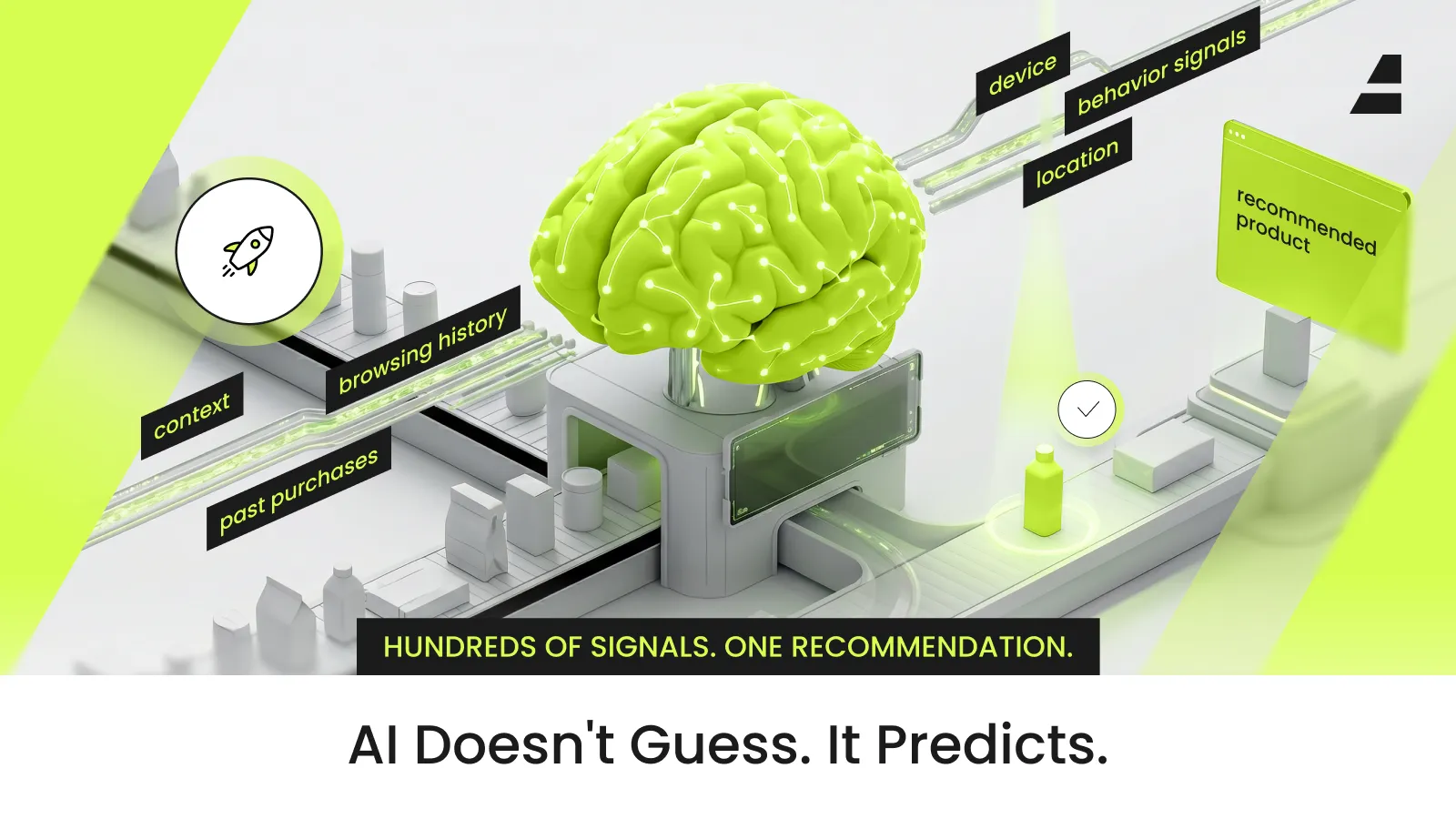
AI recommendation engines influencing consumer purchase decisions and product discovery.
AI Won’t Choose the Winners Alone
So, will AI decide what consumers buy?
Sometimes, it may get surprisingly close.
AI can narrow choices, rank products, personalize offers and remove steps between discovery and purchase. For marketers, that makes machine-mediated recommendations a serious new battleground for attention.
But algorithms still work with the signals available to them.
Brands need to be discoverable. Their offers need to be competitive. Their advertising needs to appear in quality environments. Their creative needs to communicate something worth remembering. And their technology needs to turn all those signals into measurable action.
That is where Afront is focused: combining AI-powered targeting, omnichannel reach, quality inventory and real-time optimization to help brands turn attention into performance.
AI may become part of the shopping decision.
Your brand still has to give it — and the consumer — a good reason to choose you.
Ready to make every advertising signal work harder?
