
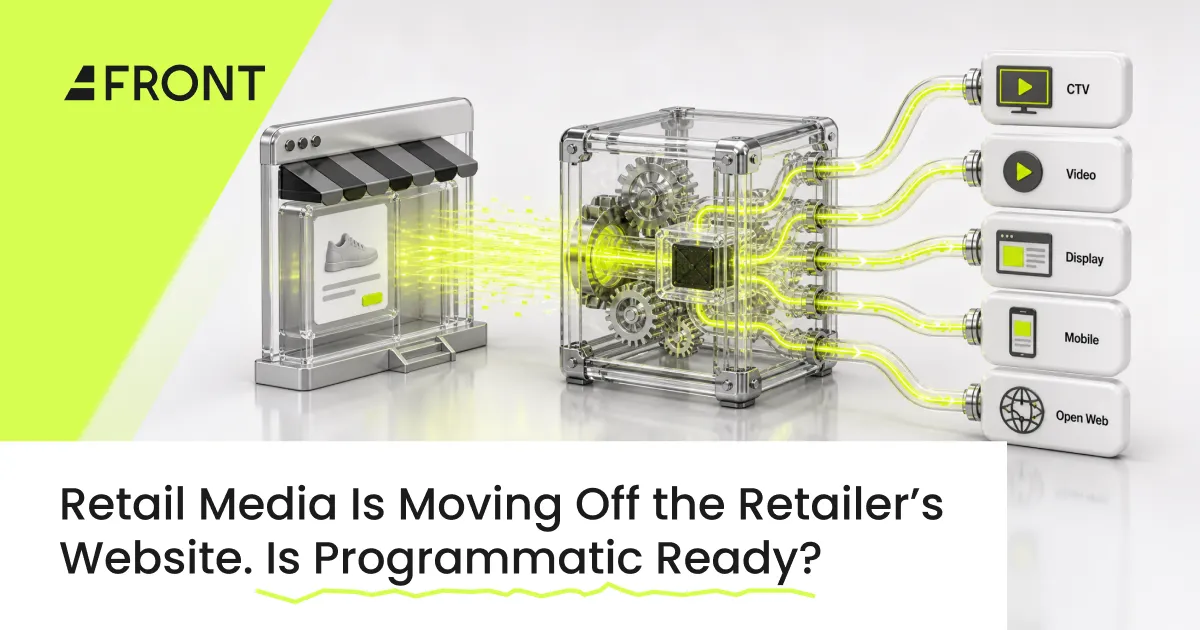
Retail media used to be easy to locate.
A shopper searched for a product on a retailer’s website. A sponsored listing appeared. Maybe a display banner followed. The advertiser paid for visibility close to the point of purchase, and the retailer used its first-party commerce data to prove the result.
That model still matters. But retail media is no longer staying neatly inside the retailer’s website.
Retailers are connecting commerce data with offsite media, streaming TV, mobile environments, marketplaces, and new AI-powered shopping experiences. Walmart offers a particularly visible example. Its global advertising revenue grew 38% in its latest reported quarter, while Walmart Connect grew 43% in the U.S., excluding Vizio. The company is also bringing Vizio and the recently acquired CTV platform Vibe.co closer to Walmart Connect, extending commerce data and measurement further into streaming.
This is bigger than another retail media growth story. It changes what we mean by retail media in the first place.
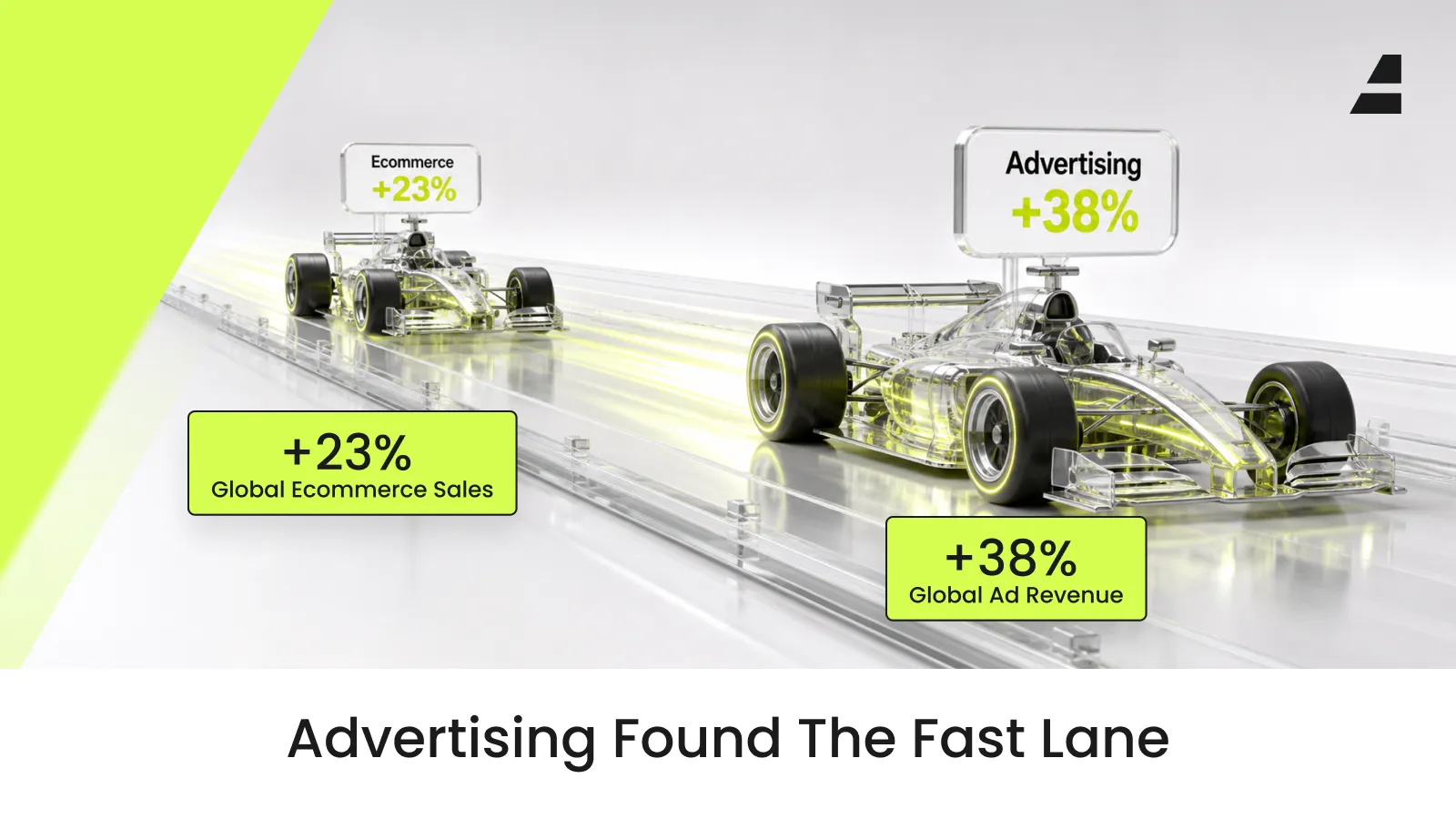
Walmart advertising revenue growth compared with global ecommerce sales growth, showing 38% ad revenue growth versus 23% ecommerce growth.
Retail Media Is Becoming an Ecosystem
For years, “retail media” often meant advertising somewhere around a digital shelf. The logic was powerful because retailers knew what people searched for, added to carts, and purchased.
Now imagine taking those signals beyond that shelf.
A consumer could encounter a brand through CTV in the evening, see another message on mobile the next morning, interact with a display ad later, and eventually purchase online or in a physical store. The retailer’s value to advertisers is no longer limited to owning the final shopping environment. It increasingly comes from connecting media exposure with real commerce signals across a much wider journey.
Walmart has described a unified approach spanning physical stores, ecommerce, marketplaces, offsite media, membership, and CTV.
That is a very different proposition from “buy a sponsored product ad on our website.”
Retailers are starting to look less like individual advertising channels and more like media ecosystems.
And once that happens, programmatic becomes difficult to ignore.
Commerce Data Is Leaving the Digital Shelf
The real competitive advantage behind retail media has always been data.
Clicks are useful. Impressions are useful. But purchase behavior tells advertisers something much closer to business outcomes.
As retailers extend their advertising operations offsite, those signals can potentially inform campaigns far beyond a product-results page. The interesting question becomes not simply where someone shopped, but how commerce intent can improve decisions about who to reach, where to reach them, and when.
That logic is already familiar to programmatic advertising.
At Afront, advanced targeting is built around signals including behavior, device usage, contextual intent, interests, and timing. Predictive algorithms and live audience signals can then help reduce wasted impressions and identify users who are more likely to engage.
Retail data adds another valuable layer to this broader signal economy.
But access to more data does not automatically create better advertising. The real test is whether those signals can be activated intelligently across environments without creating fragmented campaigns, excessive frequency, or opaque measurement.
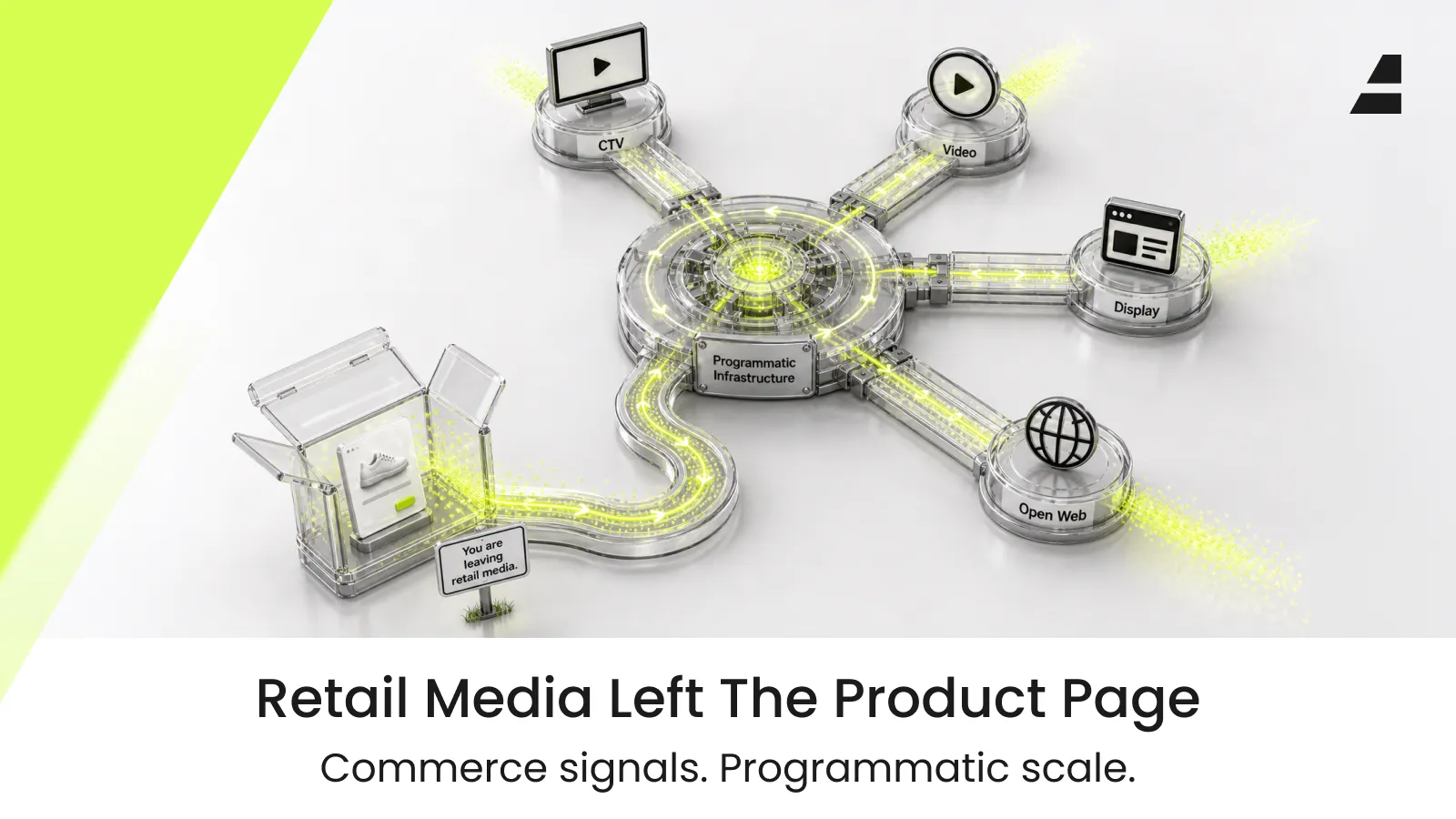
Retail media expanding beyond retailer product pages into CTV, video, display, and the open web through programmatic infrastructure.
CTV Changes the Retail Media Equation
CTV is where this evolution becomes especially interesting.
Retail media has traditionally been strong near the bottom of the funnel. Streaming introduces an opportunity to influence audiences much earlier.
Walmart’s moves illustrate that direction clearly. Its acquisition of Vibe.co, alongside its existing Vizio business, is intended to extend Walmart’s first-party commerce data and measurement capabilities into streaming environments.
Think about what that means for an advertiser.
CTV can create broad awareness on the largest screen in the home. Commerce signals can help make that reach more relevant. Other programmatic formats can continue the conversation across mobile, video, and display. Measurement can then move closer to actual business outcomes.
Suddenly, the distinction between a “retail media campaign” and an “omnichannel programmatic campaign” starts looking rather blurry.
That is not a bad thing. Afront already approaches omnichannel advertising around this reality: consumers move between devices and environments, while advertising needs to maintain relevance across those touchpoints.
Retail media moving into CTV simply makes that principle harder for advertisers to avoid.
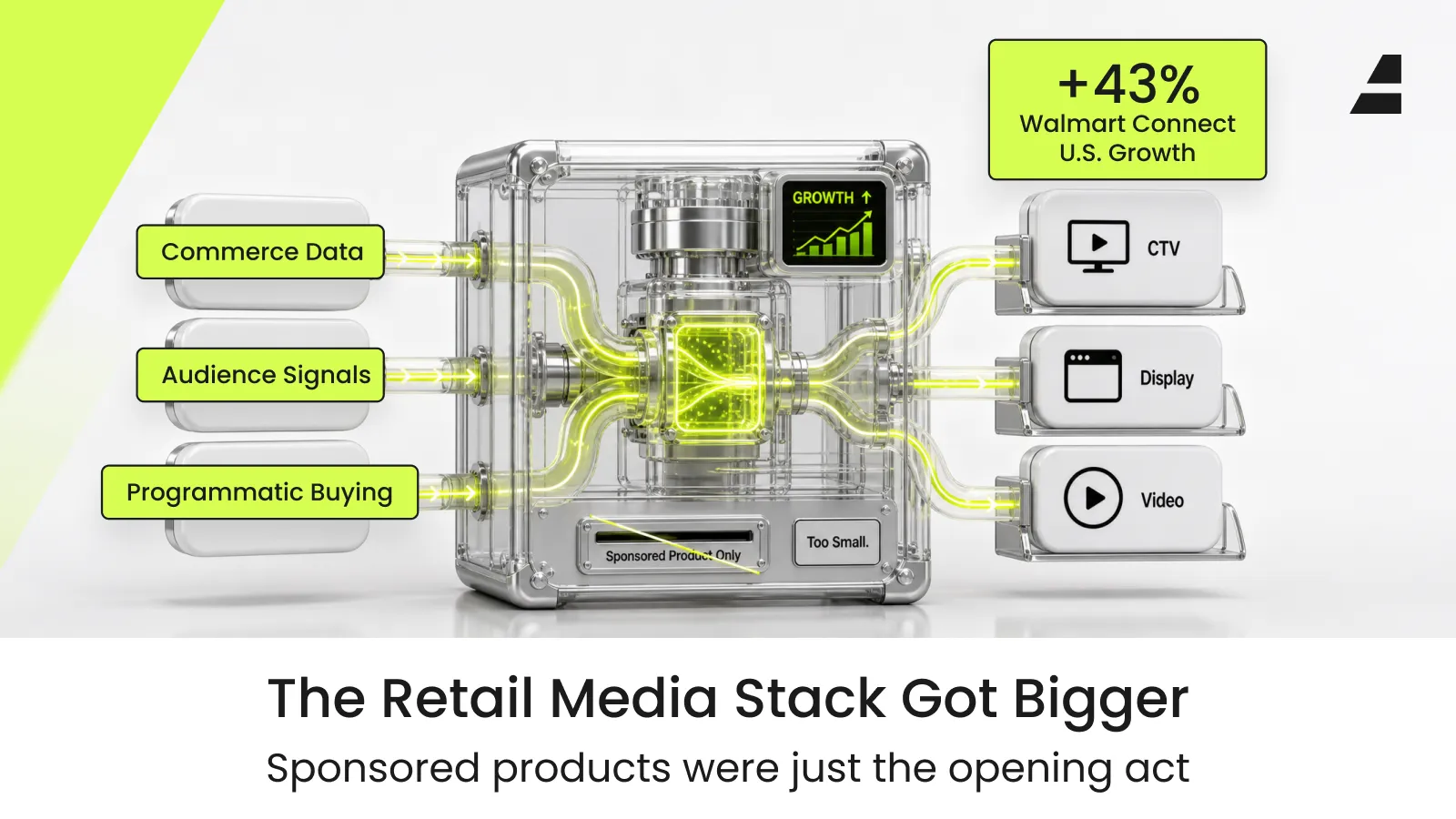
Commerce data, audience signals, and programmatic buying connecting retail media with CTV, display, and video advertising.
Should Retail Media Still Have Its Own Budget?
This may become the uncomfortable question for marketing teams.
If a retailer can offer onsite sponsored placements, offsite programmatic inventory, audience signals, CTV exposure, and commerce measurement, where exactly does the retail media budget end?
And where does the programmatic budget begin?
Historically, those budgets could sit with different teams and have different objectives. Shopper marketing focused on conversion. Brand teams focused on awareness. Programmatic teams optimized audiences and media delivery.
The technology is now mixing those responsibilities together.
An advertiser may use commerce signals for an upper-funnel CTV campaign and then continue reaching relevant audiences across display or video. Calling the first part “retail media” and the second “programmatic” may make sense on a spreadsheet. To the consumer, it is one journey.
Media planning eventually has to catch up with media behavior.
That does not mean retail media should disappear as a category. Retailers have unique inventory, customer relationships, and purchase intelligence. But advertisers may increasingly need to evaluate retail media as part of an omnichannel programmatic strategy, rather than as an isolated line item.
Programmatic Has to Earn Its Place
There is an obvious temptation here: more signals, more inventory, more automation, more targeting. Then everyone celebrates. Reality is messier.
As commerce data moves across channels, advertisers need to know what they are buying, how audiences are being reached, whether the inventory is high quality, and how performance is being measured.
The technology connecting these environments matters just as much as the size of the data pool.
Afront’s approach emphasizes real-time reporting, clear metrics, brand-safe inventory, and campaign optimization alongside audience targeting. That combination becomes increasingly important as buying expands across CTV, mobile, display, and video rather than remaining inside one closed environment.
Programmatic should not turn retail data into another black box.
It should make that data more actionable while giving advertisers enough transparency to understand what actually worked.
The Next Retail Media Advantage May Be Orchestration
Walmart’s advertising growth is eye-catching, but the more interesting signal is how the pieces are coming together.
Its global ecommerce sales grew 23% year over year, while global advertising revenue increased 38%. Walmart Connect’s U.S. growth reached 43%, excluding Vizio. Those numbers suggest advertising is becoming much more than an add-on to ecommerce.
The next competitive advantage may therefore come from orchestration: connecting first-party signals, premium inventory, programmatic buying, creative, optimization, and measurement without losing sight of the person on the other side of the screen.
Because nobody wakes up thinking, “I hope I experience a perfectly integrated commerce media ecosystem today.”
People watch. Scroll. Search. Compare. Buy.
Good advertising needs to work around those behaviors rather than forcing them into channel definitions created by the industry.
Retail media’s expansion also raises a question for publishers: does creating more advertising inventory actually create more value? As programmatic ecosystems grow across websites, apps, CTV, and offsite environments, inventory quality, attention, viewability, and yield matter as much as volume.
Retail Media Is Growing Up
Retail media moving off the retailer’s website is ultimately part of a larger change in digital advertising.
Data and inventory are becoming less tied to individual screens. Commerce signals are moving higher into the funnel. CTV is getting closer to measurable outcomes. And programmatic technology is being asked to connect more of the journey.
For advertisers, that creates an opportunity to rethink retail media not as another silo, but as another valuable source of intelligence inside a broader media strategy.
For programmatic, the challenge is clear. It needs to turn that intelligence into relevant reach, smarter optimization, and measurable performance — without adding another layer of complexity.
Retail media has already left the website. Now the infrastructure, measurement, and media strategy have to catch up.
Afront helps advertisers reach high-quality audiences across CTV, mobile, display, and video with advanced targeting, real-time optimization, and transparent performance insights. Ready to connect your next campaign across the customer journey? Contact the Afront team.
