
A publisher can produce an excellent story, watch it spread across social media and still have little control over whether those readers ever come back.
That is the traffic trap.
Search engines and social platforms can deliver enormous audiences. They can also change how content is discovered, how much traffic reaches publishers and what happens between a reader seeing a headline and visiting the original website.
For publishers, the uncomfortable part is the dependency. You can invest in journalism, video, design and distribution, yet another company's product decisions may determine how much of that work reaches your audience.
Some media companies are responding by building something they can control more directly: their own mobile apps.
The move is interesting for editorial teams. It is just as important for programmatic advertising.
An app changes how a publisher reaches readers, collects permitted audience signals, creates advertising opportunities and measures engagement. But owning the app doesn't automatically mean owning a profitable business.
The monetization strategy still has to work.
The Traffic Problem Is Really a Relationship Problem
Publishers have spent years optimizing for discovery.
Search visibility, social distribution and referral partnerships can introduce content to people who might never have encountered it otherwise. Those channels still have value.
The difficulty begins when discovery becomes the entire audience strategy.
A reader arrives through a platform, consumes one article and disappears. The publisher may earn revenue from that visit, but it has limited influence over the next one.
And if referral traffic declines, the publisher has fewer opportunities to rebuild that relationship.
This is one reason the shift toward owned products deserves attention. A mobile app gives a publisher a dedicated environment where readers can return directly, browse content and develop more consistent habits.
It doesn't eliminate dependence on outside platforms. App stores still control distribution, and attracting downloads requires investment.
But it changes the relationship.
Instead of waiting for every visit to arrive through a third-party feed, publishers can build a product people choose to open.
That distinction matters to advertisers, too.
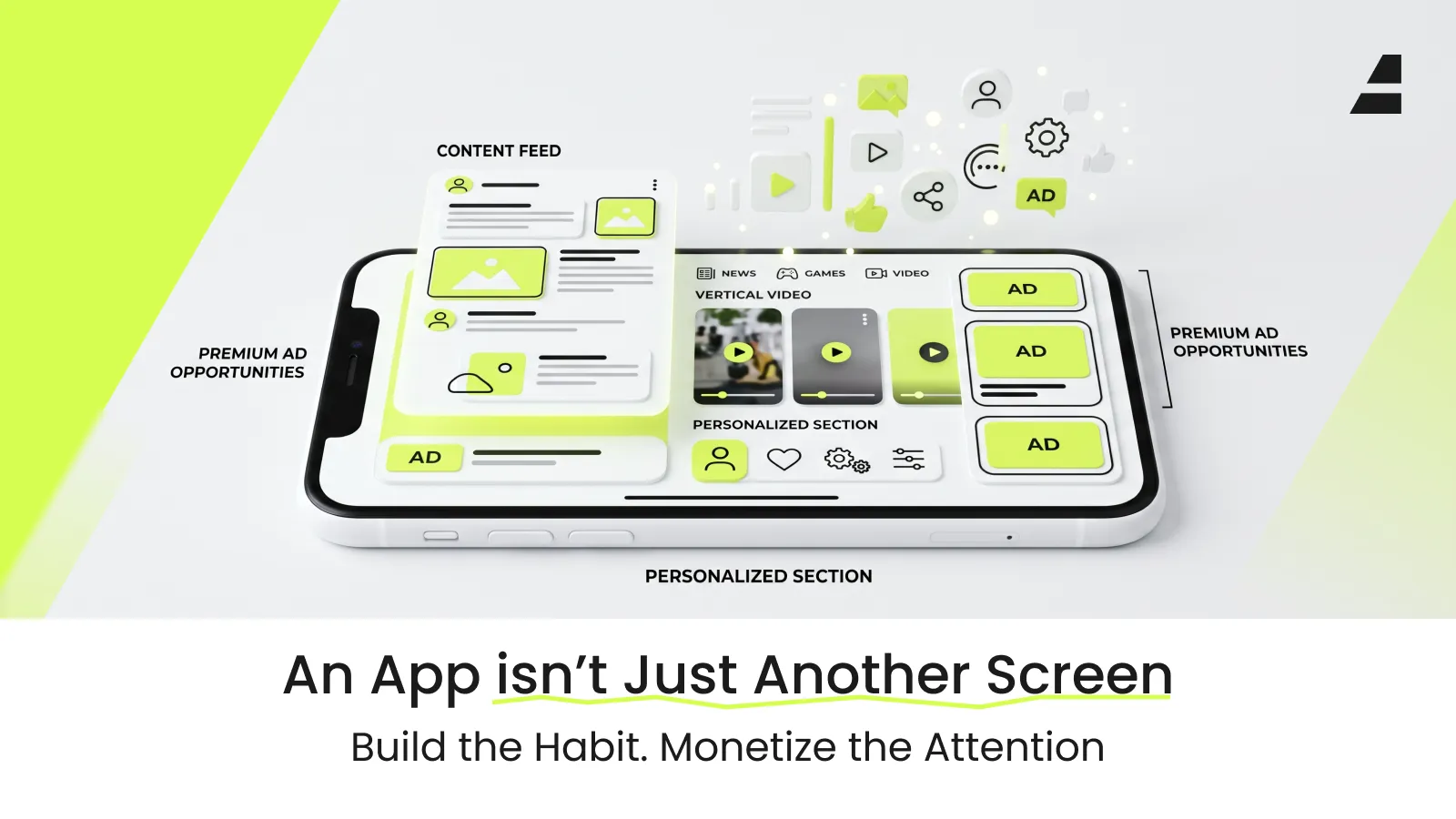
Publisher mobile app with personalized content, vertical video, and premium advertising designed to drive engagement and revenue.
Why Publishers Are Investing in Their Own Apps
Consider the difference between a casual website visitor and someone who deliberately opens a publisher's app several times a week.
Both can be valuable. They create different advertising opportunities.
An app gives publishers more control over the reading experience, content presentation and the advertising placements built into that experience.
It can also support a more direct relationship with users through features such as saved content, personalized feeds and notifications, where appropriate and permitted.
The opportunity is not simply to increase time spent.
It is to make the publisher's product worth returning to.
Sports media offers a useful example. Front Office Sports' move into mobile apps reflects the broader interest in building owned destinations around audiences with strong reasons to return.
For a sports publisher, those reasons might include breaking news, scores, analysis or coverage of a particular league. Other publishers will have different habits to build around.
The commercial logic is similar.
A repeat audience gives publishers more opportunities to understand their content performance and develop a monetization strategy around actual usage rather than unpredictable referral spikes.
Still, an app is not a shortcut.
A weak product with intrusive advertising will struggle to create the engagement publishers need. The experience has to justify the download.
What Does the App Shift Mean for Programmatic Advertising?
The immediate change is the inventory.
A publisher moving from a website-only model to a web-and-app model creates advertising opportunities across different technical environments.
Desktop display inventory and in-app banner inventory may look similar to the reader, but they are not delivered through identical integrations.
The same applies to video.
Programmatic infrastructure needs to support those differences without making monetization unnecessarily difficult for the publisher.
That is why SDK integrations, mobile bidding technology and flexible demand connections become important.
A publisher needs a practical way to make eligible app inventory available to buyers, run auctions and understand the results.
Advertisers, meanwhile, need to evaluate the available placements based on audience relevance, inventory quality and campaign objectives.
An app may provide a more consistent environment for reaching returning users. It does not automatically deliver better campaign performance.
That depends on the audience, creative, placement and buying strategy.
The real opportunity is to make app inventory valuable because of the experience around it—not merely because it exists.
An App Download Is Not a Monetization Strategy
This is where the business case becomes more complicated.
Publishers can spend heavily on app development and user acquisition. They can build an attractive product and attract downloads.
Then comes the question that matters commercially: how much revenue does the app generate from actual usage?
Download counts won't answer it.
A publisher needs to understand how frequently users return, which content attracts engagement and how advertising performs within different parts of the app.
From a programmatic perspective, fill rate and eCPM are important starting points.
Fill rate indicates how many eligible ad opportunities result in served ads. eCPM measures revenue per thousand impressions.
Neither metric should be considered in isolation.
High fill at weak prices can limit revenue. Strong eCPMs across a small volume of impressions may look impressive without making much difference to the business.
There is also the user experience.
An interstitial might generate an attractive price, but its placement and frequency matter. Video can offer valuable advertising opportunities, provided it fits the content and doesn't overwhelm the experience.
Publishers need to evaluate monetization alongside retention and engagement.
An app that earns more from one session but gives users fewer reasons to return may create a difficult long-term trade-off.
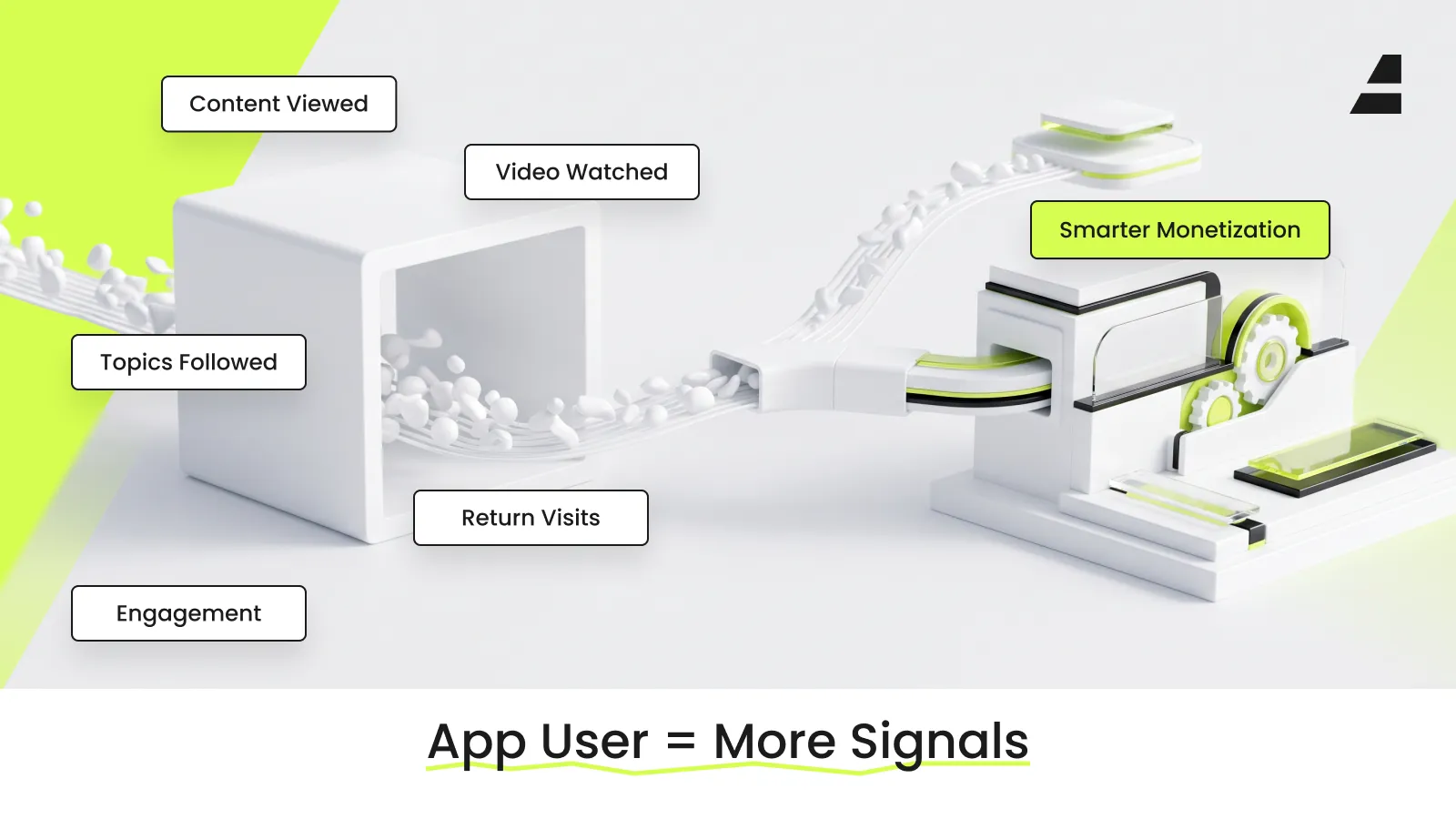
Publisher app engagement signals power first-party audience insights, smarter programmatic advertising, and improved monetization.
First-Party Relationships Create Opportunity, Not Permission to Use Everything
An owned app can give publishers a closer relationship with their audience.
That can be useful for content strategy, product development and advertising.
But direct access to users should not be confused with unrestricted access to their data.
Publishers still need appropriate privacy controls, clear data practices and a valid basis for processing information used in advertising.
The same principle applies to programmatic partners.
Understanding what information is collected, how it moves through integrations and how user choices are respected is part of building a sustainable app business.
For advertisers, relevant audience signals can help inform buying decisions when their use is permitted.
For publishers, the value lies in developing a trustworthy environment where people are willing to return.
That relationship is difficult to build and surprisingly easy to damage.
Premium Demand Matters More Than Another Monetization Connection
When app monetization underperforms, adding more demand sources can seem like the obvious response.
Sometimes broader demand access helps.
But more connections are not automatically better connections.
Publishers need to consider auction competition, demand quality, pricing and the effect of additional integrations on their operations.
A poorly managed monetization setup can become expensive to maintain without producing a meaningful improvement in revenue.
At Afront, we connect publishers with premium advertisers through direct deals and programmatic solutions, including real-time bidding across display, video and CTV.
Our publisher offering focuses on premium demand access, yield optimization and transparent reporting. We also support integration approaches including Prebid, SDK and direct tags, helping publishers work with monetization methods suited to their environments.
For app publishers, this matters because monetization needs to fit the product.
A sports app with frequent short visits will have different advertising opportunities from a long-form video app. A news publisher with substantial web traffic may need a strategy that considers both environments.
The goal is to connect suitable inventory with relevant demand and make performance understandable.
Not to complicate the stack for the sake of another integration.
The Bigger Opportunity Is a Connected Publisher Business
A publisher app should not become an isolated advertising property.
Many media businesses now operate across websites, mobile apps, newsletters, video and streaming environments. Each can serve a different purpose in the audience relationship.
The challenge is to make those products work together commercially without forcing them into identical advertising strategies.
A website may be effective at introducing new readers to a brand. An app can provide a dedicated environment for returning users. Video and CTV can create additional opportunities for premium advertising experiences.
Afront's programmatic offering spans CTV, video, display and mobile, with an emphasis on targeting, real-time optimization and performance visibility.
For publishers expanding into apps, the important question is how each environment contributes to the overall monetization strategy.
Which inventory attracts demand? Where does engagement justify a different format? What happens to revenue when the audience shifts between products?
Those questions require reporting and optimization, not assumptions.
What Should Publishers Do Before Building an App?
Start with the audience.
Why would someone download the app? What will bring them back tomorrow? Is there a clear reason to use it instead of visiting the website?
If those answers are weak, the monetization plan will have an equally difficult foundation.
Next, consider the advertising experience early in product development.
Deciding where ads belong after the app is finished can lead to awkward placements and unnecessary compromises.
The technical integration deserves the same attention. Publishers should understand which formats they plan to monetize, how their inventory will connect to demand and what reporting they will need.
Finally, evaluate the business using more than downloads or a single revenue metric.
An app is an ongoing product. Its monetization should evolve with the audience.
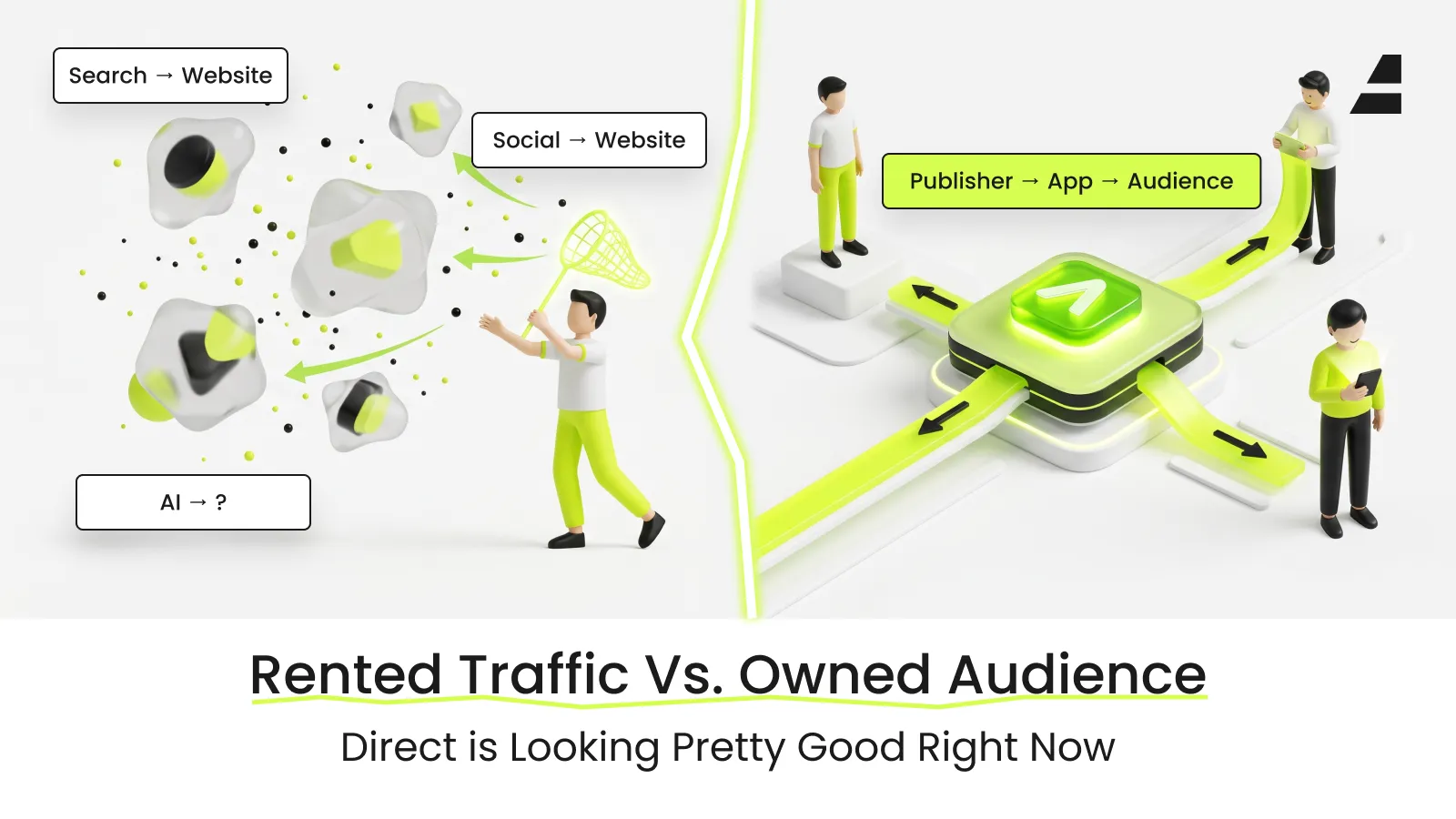
Move beyond rented search and social traffic with publisher-owned apps that build loyal audiences and unlock sustainable advertising revenue.
Publishers Are Taking Back the Audience Relationship. Programmatic Has to Follow.
The shift toward publisher-owned apps reflects a straightforward business concern: relying too heavily on external traffic makes revenue harder to control.
Apps offer another way to build direct audience relationships and create advertising opportunities within a dedicated environment.
But an app alone won't solve the traffic problem.
Publishers still need a product people want to use, advertising that fits the experience and monetization infrastructure that connects inventory with quality demand.
Programmatic technology has a role to play in making that business work.
The publishers building apps now are asking a larger question than how to generate another impression.
They're asking how to create an audience relationship worth returning to—and a revenue model that can support it.
Streaming Is Changing the Same Equation
The move toward owned apps is part of a wider shift in how media companies distribute content and connect with audiences.
Streaming offers another example. Viewers are moving across platforms and screens, while programmatic TV buying must adapt to new inventory and audience behaviors.
Read our previous article about what this shift means for advertisers and programmatic buying.
Make Your Inventory Work Smarter With Afront
Your Audience Is Growing Beyond the Browser. Your Monetization Should Keep Up.
Building an app or expanding your publisher business across screens?
Afront helps publishers connect inventory with premium demand, optimize yield and understand performance across supported advertising environments.
Let's discuss your inventory, integration requirements and monetization goals with the Afront team.
