
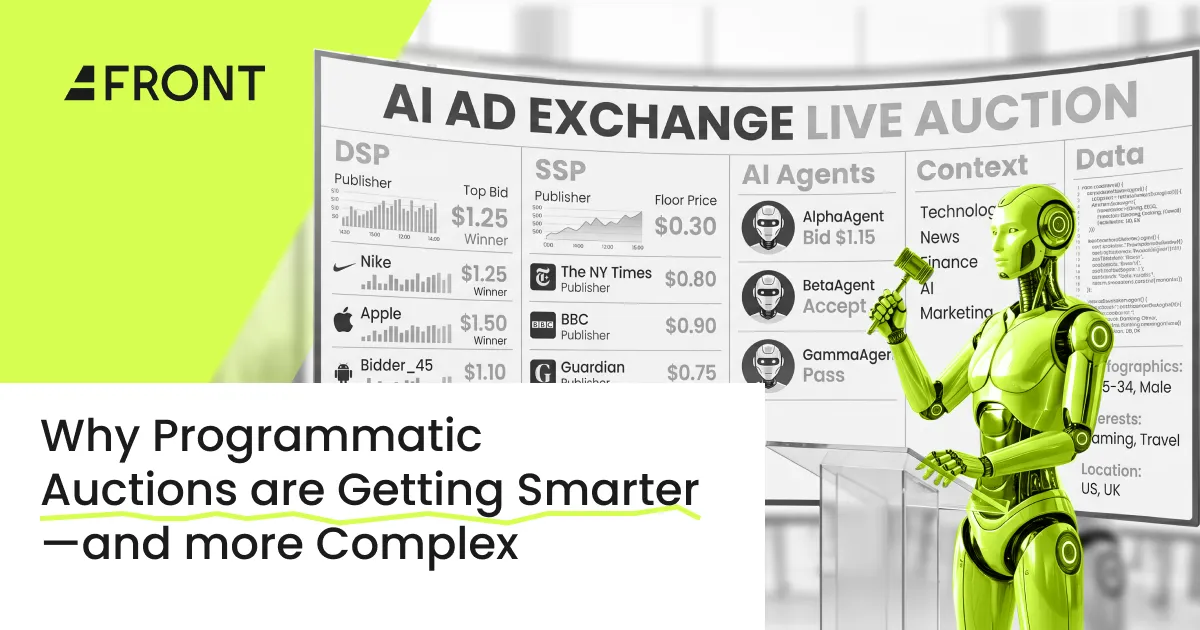
Modern programmatic auctions are no longer just about matching buyers and sellers in real time. Artificial intelligence, advanced bidding strategies, supply path optimization, audience modeling, and privacy-driven changes are transforming how auctions work and how advertising value is created.
The programmatic auction is evolving in real time. New technologies and market dynamics are introducing greater intelligence into every transaction, but they are also adding layers of complexity that advertisers, publishers, and agencies must understand to stay competitive.
For marketers, the challenge is no longer simply participating in programmatic auctions. It is understanding how these increasingly intelligent systems influence performance, costs, transparency, and outcomes.
The Programmatic Auction Is No Longer Just An Auction
For many years, programmatic advertising operated much like a traditional marketplace.
Publishers made impressions available. Advertisers placed bids. The highest bidder won the opportunity to show an ad.
While that basic structure remains intact, modern auctions now involve countless automated decisions before a bid is ever submitted.
Machine learning models evaluate users, contexts, devices, locations, historical performance, engagement signals, and countless other factors within milliseconds. The result is a highly dynamic environment where every impression is valued differently.
The auction itself has become a sophisticated decision-making engine.
Instead of simply asking who is willing to pay the most, the system increasingly asks which advertiser is most likely to achieve the desired outcome.
This shift is making auctions smarter, but also significantly more complex.

Modern programmatic auctions rely on AI to evaluate audiences, context, budgets, and bidding opportunities in real time.
AI Is Reshaping Bid Decisions
Artificial intelligence has become one of the most important drivers of modern programmatic advertising.
Rather than relying on static targeting rules, AI-powered bidding systems continuously analyze live performance signals and adjust strategies in real time.
These systems evaluate billions of data points to predict which impressions are most likely to generate clicks, conversions, engagement, or other business outcomes.
For advertisers, this creates significant advantages.
Campaigns become more efficient. Budgets are allocated more intelligently. Optimization happens continuously instead of relying on manual intervention.
At Afront, this philosophy is central to how modern advertising should operate. Our machine-learning capabilities help advertisers move beyond basic demographic targeting by analyzing behavioral signals, contextual relevance, device usage, timing, and audience intent.
The result is precision at scale — delivering messages to the right audience at the moments that matter most.
However, increased intelligence also introduces new challenges.
Many optimization decisions now occur inside complex algorithms that are difficult for marketers to fully understand. This makes transparency increasingly important.
Supply Paths Matter More Than Ever
Another major factor driving auction complexity is Supply Path Optimization (SPO).
Not all inventory reaches advertisers through the same route.
An impression may travel through multiple exchanges, intermediaries, and technology platforms before it becomes available for bidding.
Every additional step can introduce costs, inefficiencies, and reduced transparency.
As advertisers seek greater accountability, they are placing more emphasis on understanding where inventory originates and how supply chains influence performance.
Publishers are responding by creating cleaner, more direct paths to demand.
The result is an auction environment that rewards efficiency rather than simply scale.
For publishers, this means monetization strategies are becoming increasingly sophisticated. Success is no longer determined solely by fill rates or CPMs. It depends on inventory quality, auction dynamics, demand diversity, and yield optimization.
At Afront, transparency and quality remain fundamental principles because better supply paths ultimately benefit both buyers and sellers.
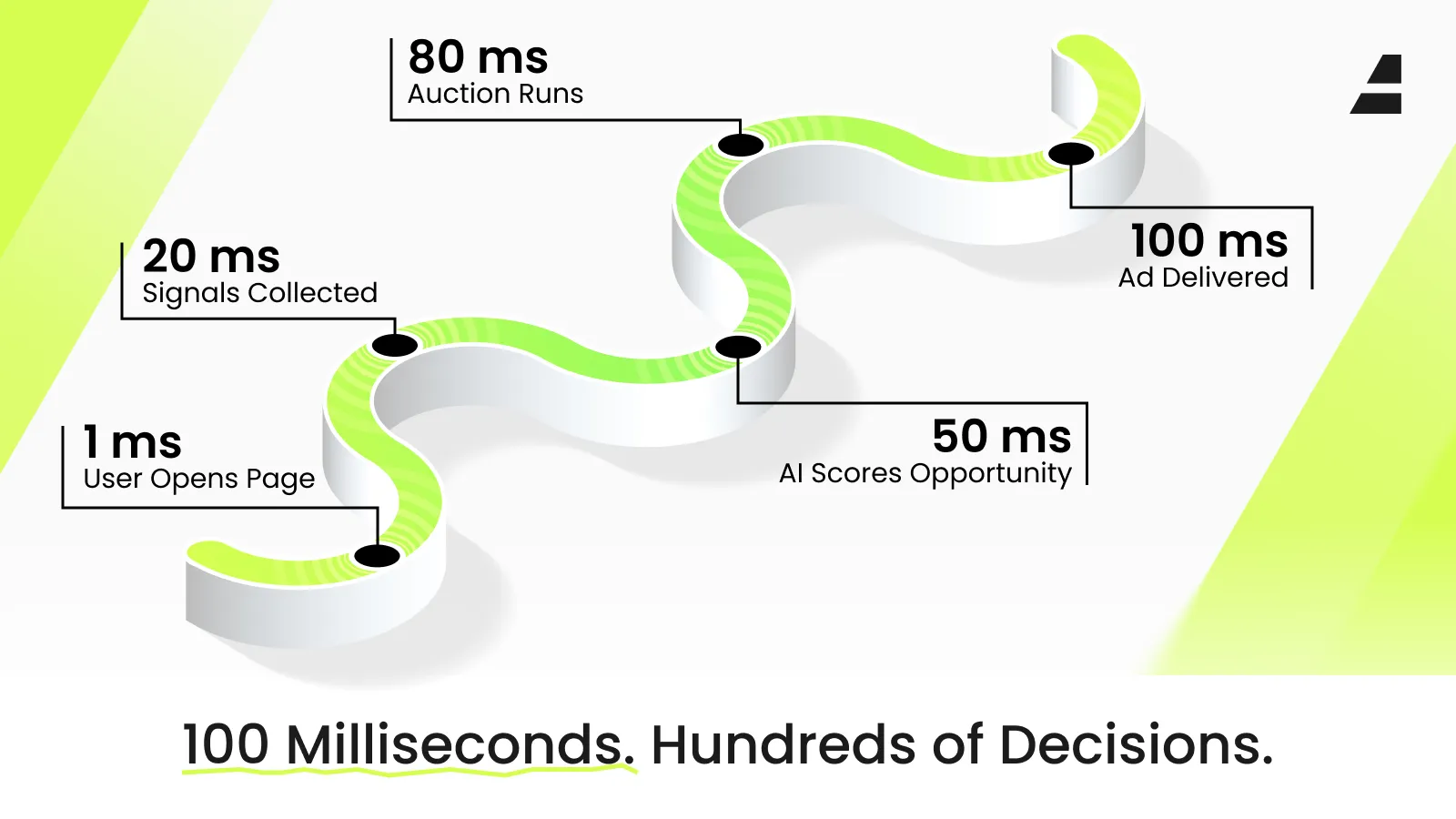
A modern programmatic auction evaluates hundreds of signals and completes real-time bidding in less than 100 milliseconds.
The Privacy Era Is Changing Auction Signals
The programmatic ecosystem is also adapting to a future with fewer third-party identifiers.
As privacy regulations continue to evolve and browsers reduce support for traditional tracking methods, advertisers must rely on alternative signals to make bidding decisions.
Contextual intelligence, first-party data, behavioral modeling, and AI-driven audience predictions are becoming more important than ever.
This transition changes how auctions operate.
Instead of relying primarily on user-level identifiers, systems increasingly evaluate content environments, engagement patterns, and contextual relevance to determine value.
For advertisers, this requires a new approach to targeting.
For publishers, it creates opportunities to leverage premium content environments as valuable signals within the auction process.
The auction is becoming less dependent on individual tracking and more dependent on intelligent interpretation.
Why Complexity Is Not Necessarily Bad
The growing complexity of programmatic auctions often creates concern among marketers.
However, complexity itself is not the problem.
The real issue is whether complexity delivers better outcomes.
Modern auctions are becoming more sophisticated because digital advertising environments are becoming more fragmented. Consumers move across devices, channels, and content experiences throughout the day.
A simple auction model can no longer capture the nuances required to deliver relevant advertising experiences at scale.
Smarter auctions allow advertisers to make better decisions while helping publishers maximize the value of their inventory.
When supported by transparency, quality data, and strong technology infrastructure, complexity becomes a competitive advantage rather than a barrier.

Programmatic advertising has evolved from simple bidding to AI-powered decision-making driven by data, context, and predictive optimization.
What Advertisers Should Focus On
As auctions evolve, advertisers should focus less on chasing individual bidding tactics and more on understanding the systems driving performance.
Visibility into supply paths, optimization logic, audience strategies, and measurement frameworks is becoming increasingly important.
The platforms that provide transparency alongside automation will be best positioned to deliver sustainable results.
At Afront, we believe performance starts with clarity. Our platform combines advanced technology, machine-learning optimization, omnichannel activation, and real-time reporting to ensure advertisers always understand where their budgets are going and what outcomes they are generating.
With over 2 billion monthly impressions, 300 million unique users, more than 30,000 publishers, and coverage across 150+ countries, Afront helps brands scale globally while maintaining transparency and control.
The Future Of Programmatic Auctions
The future of programmatic advertising will not be defined by simpler auctions.
It will be defined by smarter ones.
Artificial intelligence, contextual intelligence, predictive optimization, and privacy-first technologies will continue transforming how inventory is valued and how media decisions are made.
For advertisers, agencies, and publishers, success will depend on choosing partners that can navigate this complexity without sacrificing transparency.
Because in modern programmatic advertising, the smartest auction is not necessarily the fastest or the cheapest.
It is the one that consistently delivers measurable outcomes.
Programmatic auctions are only one part of a larger transformation happening across digital advertising.
Ready To Stay Ahead Of Programmatic Change?
At Afront, we combine frontline technology, AI-powered optimization, premium inventory access, and full transparency to help advertisers and publishers thrive in an increasingly complex advertising landscape.
Whether you're looking to improve campaign performance, maximize inventory value, or build a future-ready media strategy, our team is ready to help.
