
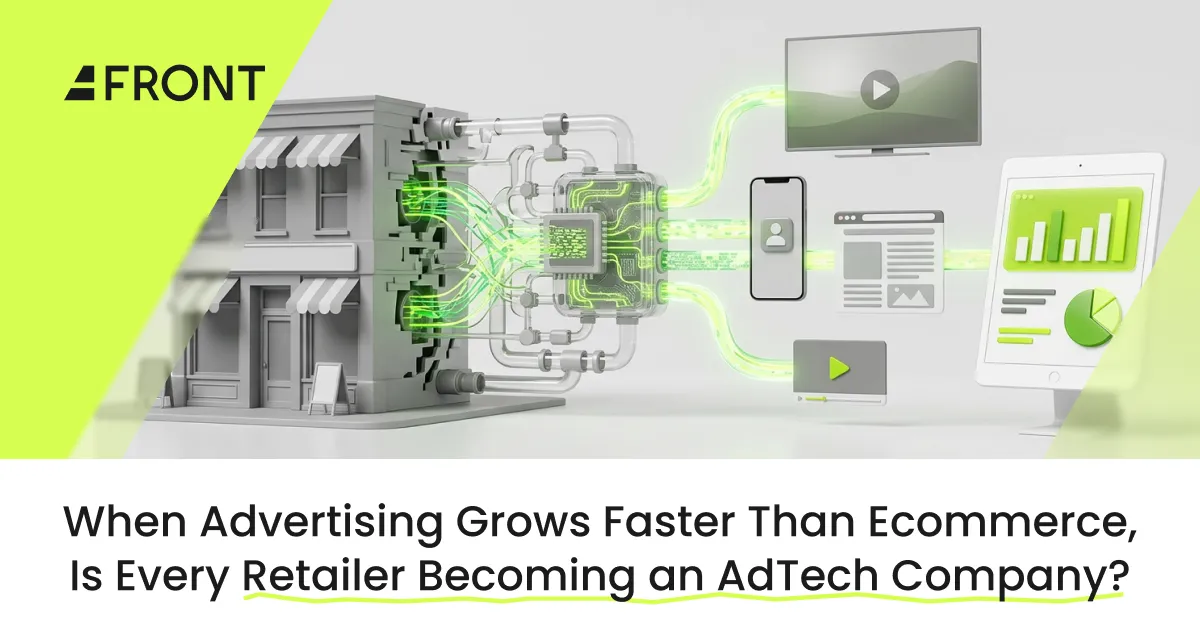
For years, ecommerce growth was the headline retailers wanted to talk about. More online shoppers. More digital transactions. More marketplace volume.
Now another number is starting to demand attention: advertising revenue.
Walmart offers a striking example. In its second quarter of fiscal 2027, global ecommerce sales grew 23% year over year. Strong performance by almost any standard. But Walmart’s global advertising business grew even faster — 38% — while Walmart Connect in the U.S. grew 43%, excluding VIZIO.
That gap is worth watching.
It suggests that large retailers are no longer simply using advertising to sell more products. They are increasingly building media businesses around the data, audiences, inventory, and customer relationships they already own.
So where does retail end and AdTech begin?
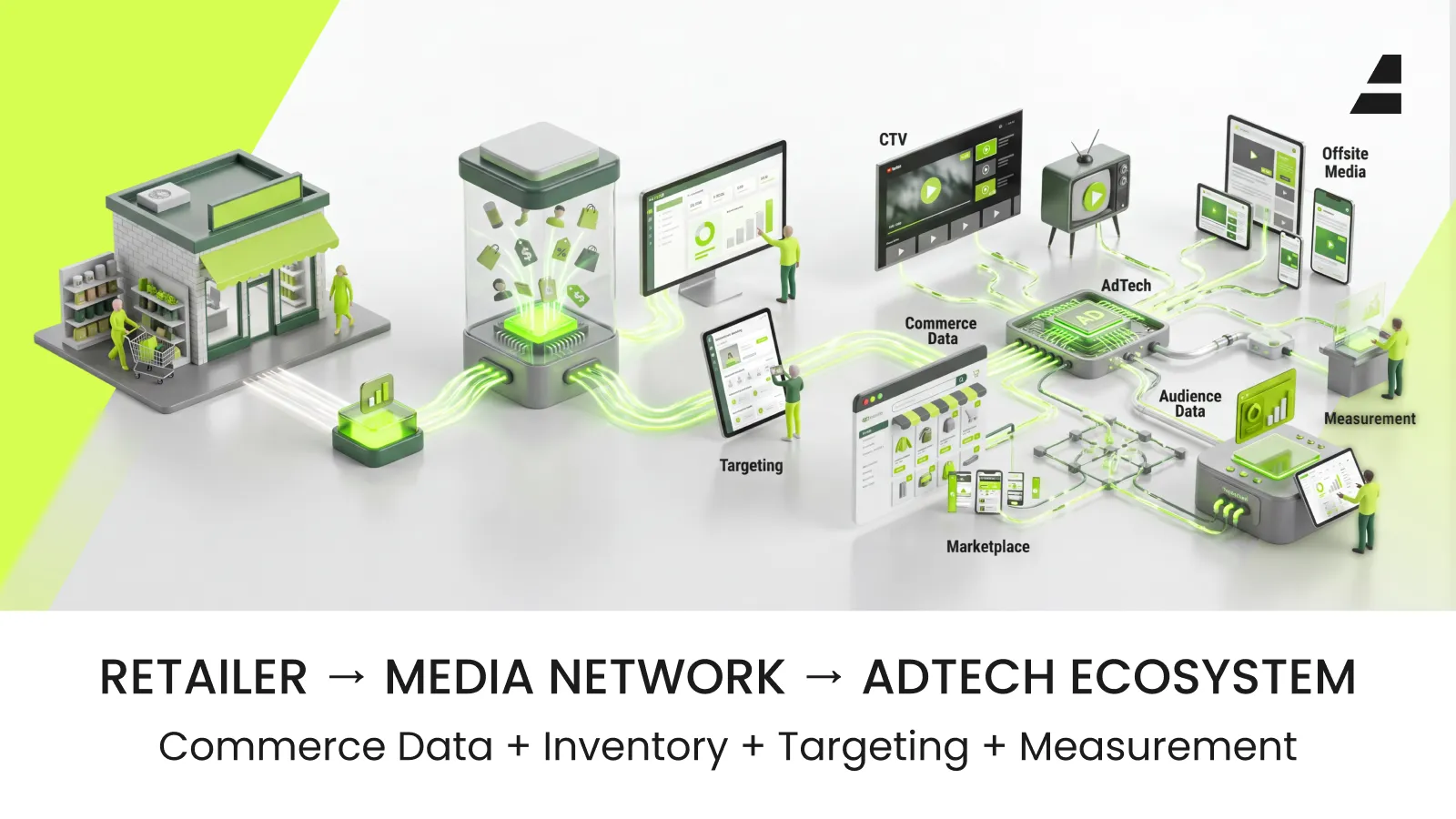
Retail media ecosystem showing how retailers evolve into AdTech platforms using commerce data, audience targeting, CTV, offsite media and measurement.
Retailers Are Sitting on Something Advertisers Want
A large retailer knows much more than what someone eventually buys.
It can see product searches, browsing behavior, shopping frequency, categories of interest, purchases, and other signals generated throughout the customer journey. For advertisers, those first-party commerce signals can be extremely valuable.
The retailer also controls environments where purchase decisions happen.
Put those advantages together and advertising becomes a natural extension of the retail business.
This is one reason retail media has moved far beyond sponsored product listings on ecommerce search pages. Retailers are developing media propositions that can extend across websites, apps, offsite inventory, connected TV, and other digital environments.
Walmart, for example, has described a broader commerce media vision connecting stores, ecommerce, marketplaces, membership, CTV, and offsite media.
That sounds increasingly familiar to anyone working in AdTech.
The Retail Media Network Is Becoming an Advertising Platform
The early retail media proposition was relatively straightforward: brands paid for better visibility close to the digital shelf.
Today, the ambition is much bigger.
Retail media networks increasingly want to help advertisers identify audiences, activate campaigns, optimize media, connect campaigns across channels, and measure what happened afterward.
In other words, they are moving across more of the advertising value chain.
This shift matters because the retailer has one major advantage over many traditional media environments: proximity to commerce.
An impression can potentially be connected with a shopping signal. A campaign can be evaluated against product activity. Audience strategies can be informed by first-party retail data.
That makes the retailer more than the place where a transaction happens.
It can also become the data owner, media seller, audience platform, activation partner, and measurement layer.
At that point, asking whether retailers are becoming AdTech companies stops sounding provocative. It starts sounding practical.
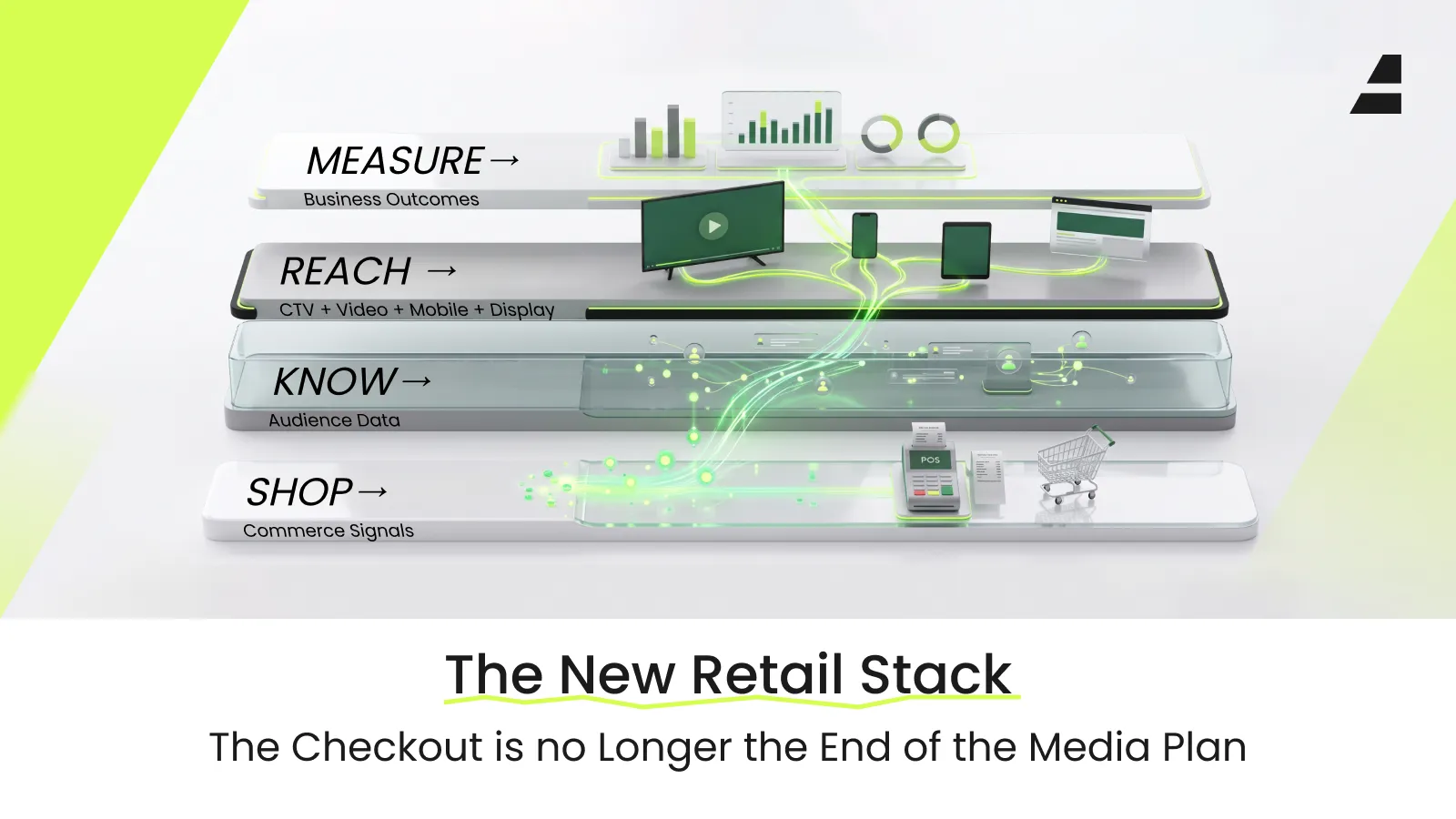
Retail media technology stack connecting commerce signals and audience data with programmatic advertising across CTV, video, mobile and display.
Advertising Can Change the Economics of Ecommerce
There is another reason this trend deserves attention.
Ecommerce is expensive to operate.
Retailers have to manage technology, fulfillment, logistics, customer service, returns, inventory, delivery, and increasingly high consumer expectations around speed and convenience.
Advertising works differently.
The retailer already has much of what is needed to create the media opportunity: traffic, customer relationships, shopping data, digital properties, and commercial partnerships with brands.
That can make advertising an attractive additional revenue stream.
Walmart’s latest numbers illustrate the direction. The company reported 38% global advertising growth against 23% global ecommerce growth in Q2 FY27. Walmart itself has been clear that businesses including marketplace, fulfillment services, membership, advertising, and other commerce solutions are strengthening its overall business model.
The interesting story, then, is not simply that retail media is growing.
It is that advertising is becoming part of the economics of modern retail.
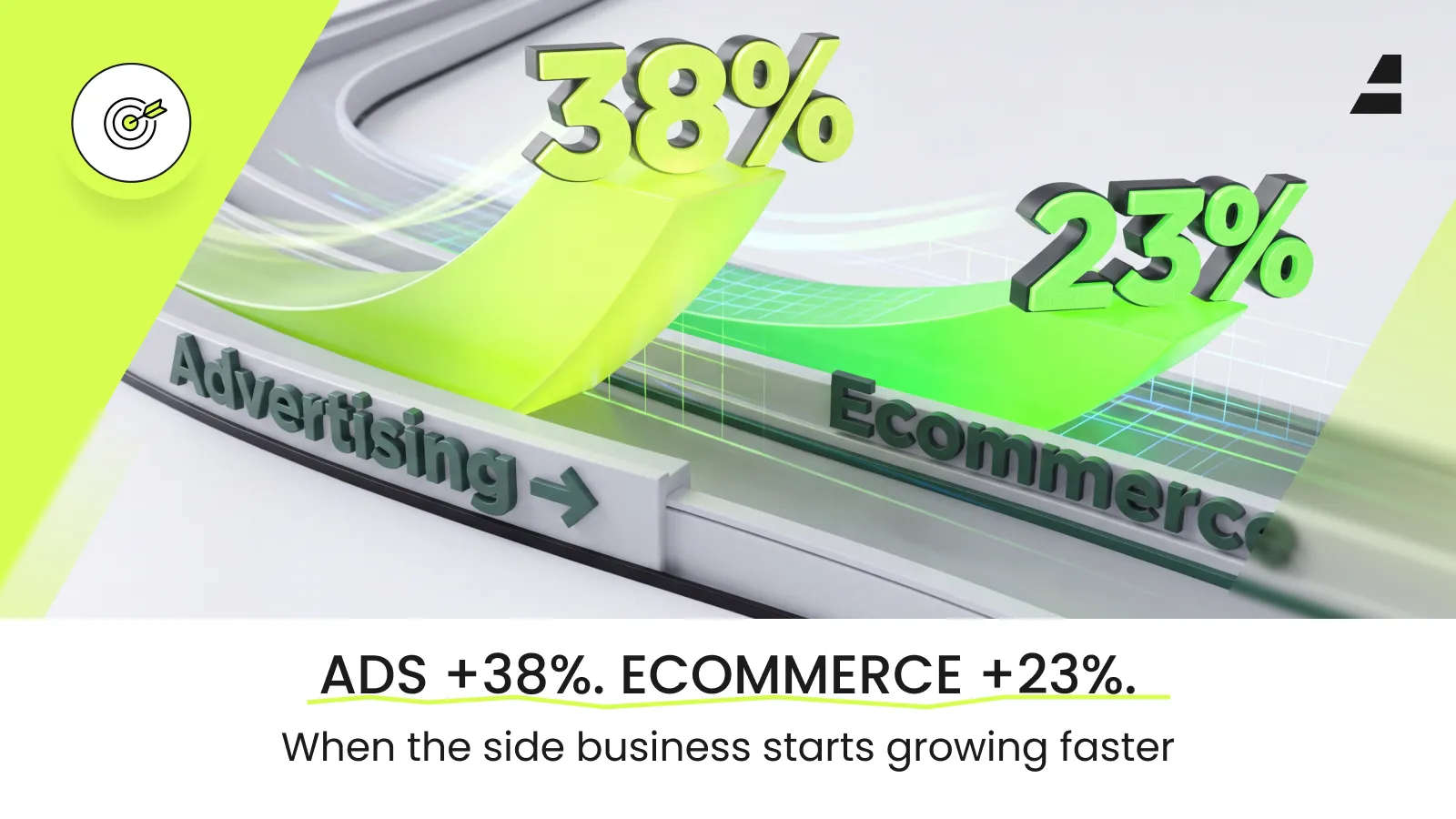
Visualization comparing Walmart advertising growth of 38% with ecommerce growth of 23%, highlighting the rapid expansion of retail media advertising.
The Store, the Media Network and the AdTech Stack Are Converging
A shopper watches streaming TV at home. Later, they browse products on their phone. They visit a retailer’s website, compare options, and eventually make a purchase online or in a physical store.
For a retailer with the right technology and first-party signals, those moments can form part of one connected commerce ecosystem.
This changes the role of the media.
Retailers are no longer limited to selling an ad beside a product listing. They can increasingly participate across the funnel, from awareness to consideration and purchase.
Connected TV makes this especially interesting.
Walmart completed its acquisition of Vibe.co in August 2026, following its earlier VIZIO acquisition. The company says the combination is intended to expand Walmart Connect’s streaming TV advertising capabilities and help advertisers plan, buy, and measure CTV campaigns.
That is a significant evolution from the traditional idea of a retailer.
The media opportunity is moving away from a single retail website and toward a broader programmatic ecosystem.
First-Party Data Is an Advantage. It Is Not the Whole Strategy.
Having valuable commerce data does not automatically create a strong advertising business.
Advertisers still expect scale, useful targeting, quality inventory, transparent reporting, measurement, efficient campaign execution, and technology that can connect different environments.
Publishers and media owners face similar expectations. Premium inventory has to be discoverable, monetizable, measurable, and attractive to quality demand.
That is where programmatic infrastructure becomes important.
As retailers expand their media businesses, they have to solve many of the same problems that have shaped AdTech for years: audience activation, auction dynamics, inventory quality, cross-channel delivery, frequency, optimization, reporting, measurement, and interoperability.
There is also a balance to maintain.
Retailers may own valuable customer signals, but advertisers still need visibility into where budgets go and what those investments deliver. More data does not remove the need for transparency. If anything, a more complex commerce media ecosystem makes transparency more important.
Retail Media Is Becoming Part of the Omnichannel Plan
For advertisers, the practical question is no longer whether retail media belongs on the media plan.
The more useful question is how it connects with everything else.
Consumers do not experience advertising in neat channel categories. They move between CTV, mobile, desktop, video, commerce platforms, and physical environments.
Media strategies have to follow that reality.
At Afront, this is central to how we approach programmatic advertising. Our platform helps advertisers connect with audiences across CTV, mobile, display, and video, combining advanced targeting with real-time optimization and transparent performance insights.
The goal is not to add another isolated channel.
It is to understand how different environments can work together to move audiences from attention toward action.
That becomes even more relevant as retailers themselves expand across more of those environments.
Performance Still Needs a Brand
There is a temptation with commerce media to focus entirely on measurable outcomes.
A purchase happened. A product was viewed. A conversion was attributed.
Those signals matter. But advertising cannot become only a machine for harvesting existing demand.
Brands still need to create recognition, attention, and preference before a customer reaches the digital shelf.
This is why the relationship between programmatic performance and brand identity is becoming increasingly important. Better targeting cannot compensate for forgettable creative, just as memorable creative cannot compensate for poor delivery.
The same principle applies to retail media. Strong commerce signals can make advertising more precise, but long-term growth still depends on giving people a reason to choose the brand.
So, Is Every Retailer Becoming an AdTech Company?
Not every retailer will build a full advertising technology stack. Nor does every retailer need to.
But the direction is difficult to ignore.
The largest retailers increasingly control first-party signals, audience relationships, digital inventory, media products, activation capabilities, and measurement. Some are expanding into CTV and offsite advertising. Others are building retail media networks that operate more like sophisticated advertising platforms than traditional retailer marketing programs.
The line between commerce companies, media owners, and the AdTech platform is getting thinner.
For advertisers, that creates more opportunities — and more complexity.
Winning in that environment requires more than access to inventory. It requires smart audience strategies, high-quality placements, real-time optimization, strong creative, and a clear view of performance across channels.
That is where the right programmatic partner matters.
Ready to turn a more complex media landscape into measurable growth? Afront combines programmatic technology, premium multi-format inventory, advanced targeting, and real-time optimization to help your campaigns perform across CTV, video, display, and mobile.
