
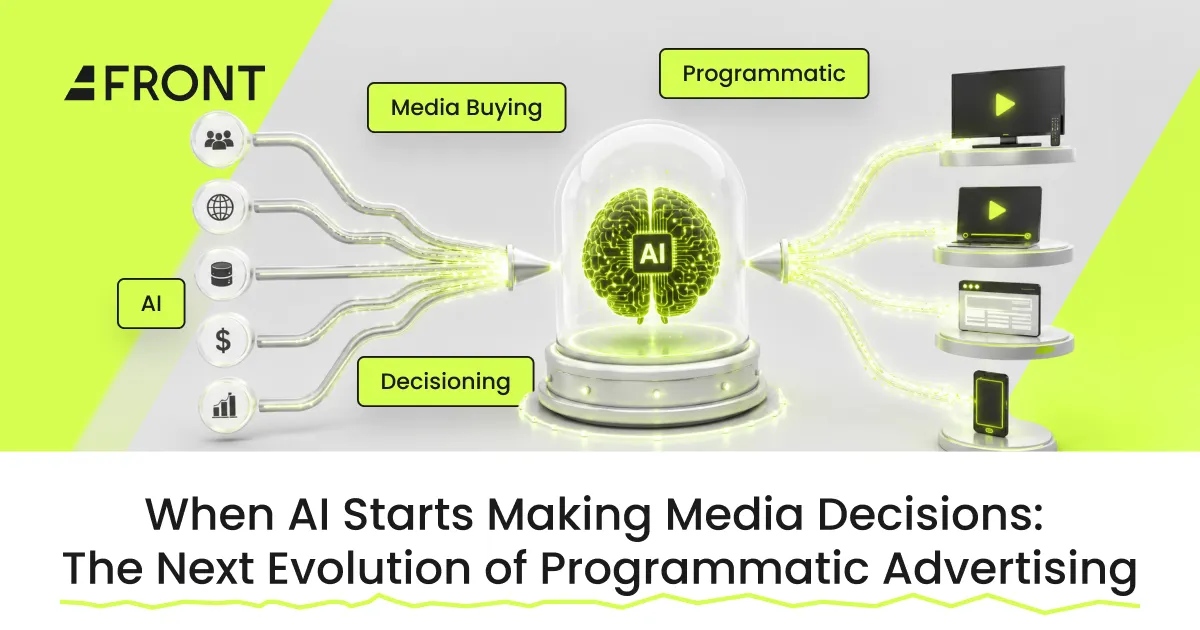
A few years ago, AI in advertising mostly meant smarter reporting. Then it became better audience targeting, automated bidding, and faster campaign optimisation. Today, we're watching another shift unfold. AI is beginning to make decisions that used to belong exclusively to media buyers.
It's happening gradually, almost quietly. Campaigns adjust budgets without waiting for manual approval. Algorithms identify inventory worth paying more for before anyone notices the trend. Audience segments evolve while campaigns are still running. Instead of following instructions, AI is increasingly interpreting objectives and deciding how to reach them.
This isn't science fiction, nor is it about replacing marketers. It's the next stage of programmatic advertising, where technology takes care of thousands of operational decisions so people can focus on strategy, creativity and business growth.
For advertisers, agencies and publishers, the question is no longer whether AI will shape media buying. It already does. The real conversation is about how much responsibility we're ready to give it — and what safeguards need to stay in place.
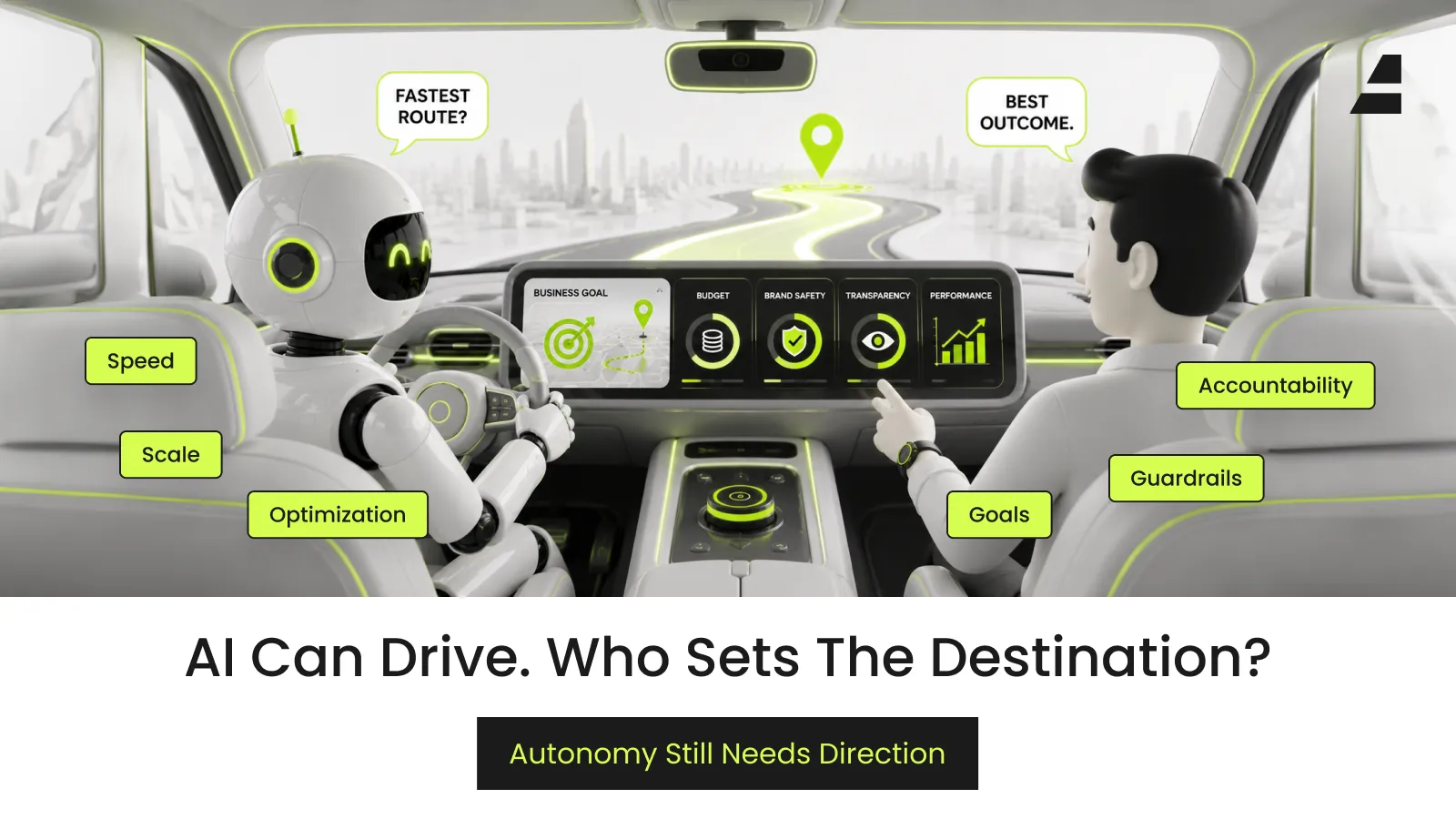
Artificial intelligence can optimize bids, budgets, audience targeting, and campaign performance in real time, but it still depends on clearly defined business objectives. Successful programmatic advertising combines AI automation with human expertise, ensuring every optimization aligns with campaign goals, brand safety requirements, transparency, and long-term marketing strategy.
Programmatic Advertising Was Always Moving Towards This Moment
Programmatic advertising has never been static. Every major innovation over the last decade has reduced manual work.
Real-time bidding replaced traditional buying methods. Machine learning improved audience segmentation. Predictive analytics helped forecast campaign performance before impressions were even served.
The next logical step is allowing AI to connect all those capabilities and act on them automatically.
Think about the number of variables involved in a single campaign today. Device type. Geography. Time of day. Publisher quality. Creative performance. Frequency. Viewability. Contextual signals. User behaviour. Budget pacing. Bid density. Conversion probability.
No media buyer — no matter how experienced — can analyse all of those signals simultaneously across millions of auctions every second.
Machines can.
That's where the conversation around agentic AI begins. Rather than simply following a predefined rule, AI can evaluate multiple scenarios, prioritise opportunities and recommend — or even execute — the next action based on campaign objectives.
The important distinction is that AI isn't becoming the strategist. It's becoming an exceptionally efficient operator.
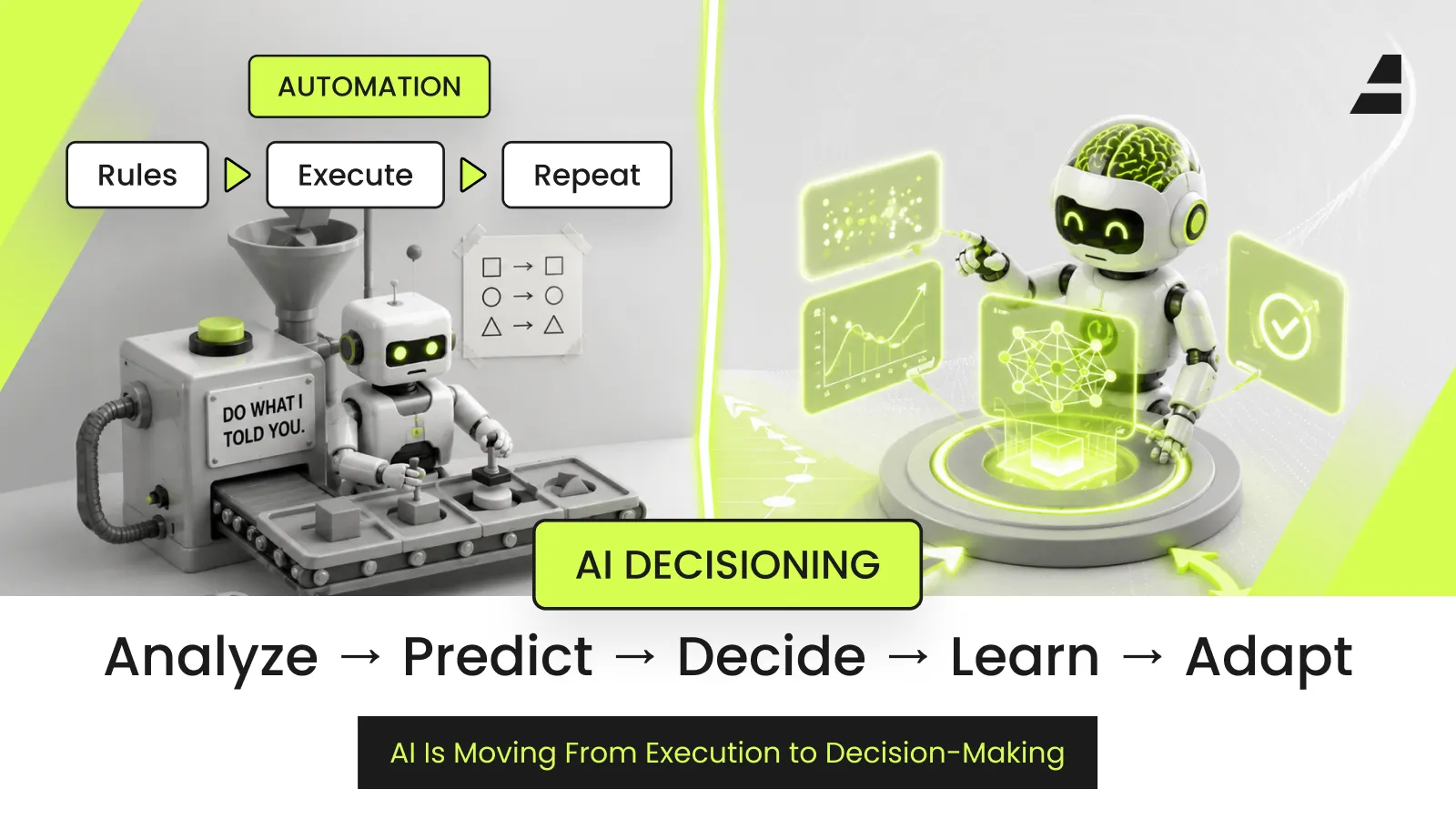
Traditional automation follows predefined rules and repetitive workflows. Modern AI systems go further by analyzing live campaign data, predicting outcomes, making optimization decisions, and continuously learning from performance. This evolution enables advertisers to respond faster to market changes while improving media efficiency across channels.
Speed Has Become a Competitive Advantage
Digital advertising moves far too quickly for manual optimisation alone.
A campaign launched in the morning can experience completely different market conditions by lunchtime. Consumer behaviour changes throughout the day. Premium inventory becomes available unexpectedly. Publishers see fluctuations in traffic. Competitors increase bids without warning.
Waiting until tomorrow to react often means paying more for weaker results.
AI closes that gap.
Instead of reviewing campaign reports after performance drops, intelligent systems identify changes while they're happening. Budgets shift automatically towards stronger-performing placements. Underperforming creatives receive less delivery. High-value audience segments gain additional investment before competitors even notice the opportunity.
For advertisers, this translates into something much more valuable than automation.
It creates responsiveness.
The brands that react first usually outperform the brands that analyse later.
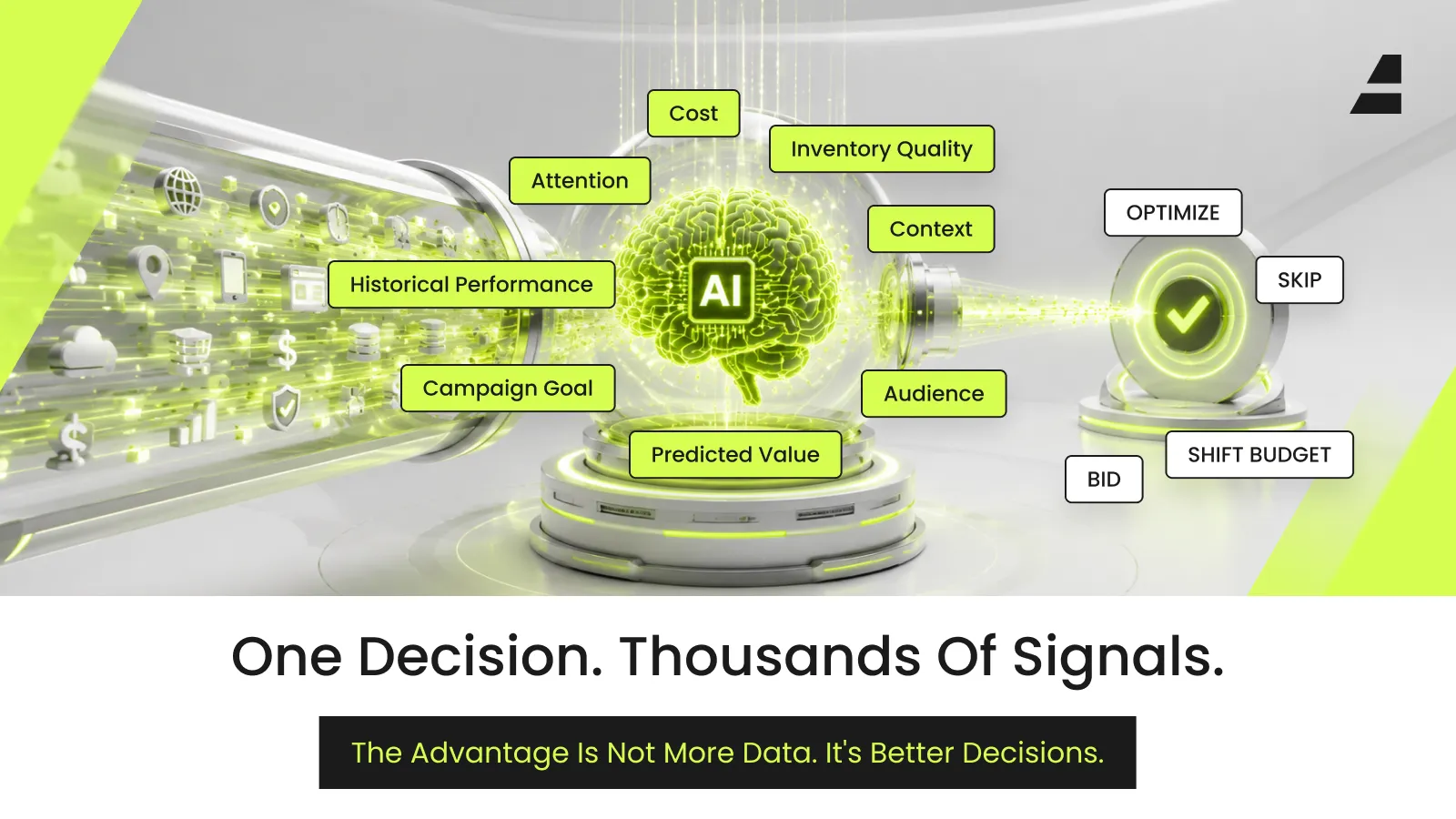
Artificial intelligence is transforming programmatic advertising from automated execution into intelligent media decision-making. By evaluating thousands of real-time signals across display, video, mobile, and Connected TV (CTV), AI helps advertisers optimize budgets, improve targeting, and maximize campaign performance with greater speed and precision.
Better Decisions Still Depend on Better Data
There's a common misconception that AI somehow creates intelligence on its own.
It doesn't.
Every recommendation, prediction and optimisation depends entirely on the quality of the signals flowing into the system.
Poor data simply produces poor decisions — only faster.
That's why first-party insights, contextual understanding, clean measurement and transparent reporting are becoming more important, not less.
As third-party cookies continue to disappear, successful advertisers are investing in richer audience intelligence rather than larger audience pools. They care less about reaching everyone and more about reaching people who are actually likely to engage.
This shift perfectly aligns with where programmatic advertising is heading.
Precision is replacing scale as the true measure of campaign quality.
At Afront, audience targeting goes far beyond basic demographics. Machine learning models analyse behavioural signals, browsing patterns, device usage, contextual relevance and real-time engagement to identify moments when users are most receptive to advertising.
The goal isn't simply serving more impressions.
It's making every impression count.
Transparency Is Becoming a Business Requirement
One of the biggest concerns surrounding autonomous AI isn't the technology itself.
It's visibility.
Advertisers are comfortable with automation as long as they understand why decisions are being made.
Nobody wants campaign budgets disappearing into what feels like a black box.
Imagine logging into your reporting dashboard and discovering that AI has shifted 35% of your budget from one publisher to another overnight.
Naturally, the first question isn't whether performance improved.
It's why.
Which signals changed?
Which placements outperformed expectations?
What audience behaviour triggered the adjustment?
Can those insights be repeated?
These aren't technical questions. They're business questions.
The companies leading the next generation of programmatic advertising understand this. AI cannot simply optimise campaigns — it also needs to explain its reasoning in ways marketers can understand.
That's why transparency is becoming one of the industry's biggest competitive advantages.
At Afront, transparency isn't treated as a feature added after optimisation. It's part of the optimisation process itself.
Real-time dashboards, measurable KPIs and clear campaign reporting ensure advertisers always understand where budgets are spent, how decisions affect performance and where new opportunities emerge.
Technology should increase confidence.
Not reduce it.
AI Won't Replace Great Media Buyers
Every few years, a new technology arrives promising to eliminate the need for human expertise.
Search algorithms were supposed to replace marketers.
Programmatic platforms were supposed to replace planners.
Automation was supposed to replace campaign managers.
None of those predictions came true.
Instead, the role evolved.
The same thing is happening with AI.
The strongest media buyers aren't worried about algorithms taking their jobs. They're learning how to use those algorithms to make better strategic decisions.
Because while AI can optimise delivery, it doesn't understand brand perception.
It doesn't negotiate partnerships.
It doesn't recognise cultural nuance.
And it certainly doesn't build the creative ideas that make people stop scrolling.
Those responsibilities still belong to people.
The best results come from combining machine intelligence with human judgement—a partnership where each side focuses on what it does best.
AI Is Changing the Publisher Side Too
For publishers, AI isn't just another optimisation layer. It's becoming a revenue engine.
Managing inventory has always involved a balancing act. Push floor prices too high and fill rates suffer. Lower them too much and valuable impressions are sold below their true worth. Finding the sweet spot manually isn't realistic when demand changes every second.
This is where AI makes a measurable difference.
Instead of reacting to yesterday's reports, intelligent yield optimisation analyses live auction data, bid density, seasonal trends, audience quality and advertiser demand as it happens. Price floors can adjust dynamically. Premium inventory is recognised sooner. Buyers willing to pay more are matched with the right placements before opportunities disappear.
The outcome isn't simply higher CPMs. It's smarter monetisation.
Publishers also benefit from something equally valuable: consistency. Revenue becomes less dependent on manual tweaks and more resilient to fluctuations in demand because optimisation never stops.
At Afront, we connect premium publishers with verified advertisers through transparent programmatic solutions that maximise inventory value across CTV, video and display. Every impression is treated as an opportunity, not just another auction.
Why Connected TV Will Accelerate This Shift
Connected TV has already changed how premium video inventory is bought and sold. Unlike traditional digital advertising, CTV combines the scale of programmatic with the quality of television, creating an environment where every impression carries greater value.
That also makes every decision more important.
A poorly placed display impression might be forgotten within seconds. A premium CTV placement during a popular streaming show carries far greater impact — and a much higher price tag.
As CTV inventory continues to grow, manual optimisation simply won't keep pace.
AI can evaluate audience signals, viewing behaviour, household characteristics, frequency, contextual relevance and campaign goals simultaneously, helping advertisers decide not only whether to bid but also how much that impression is actually worth.
This becomes especially important as campaigns expand across multiple channels.
Consumers rarely follow a straight path anymore. Someone might first discover a brand while watching a streaming platform in the evening, compare products on their laptop the next morning and finally convert after seeing a mobile video ad during their commute.
Looking at those touchpoints in isolation doesn't tell the full story.
AI helps connect them.
Instead of treating CTV, display, mobile and video as separate campaigns, intelligent systems optimise the customer journey as a whole. Budgets flow towards combinations of channels that genuinely influence outcomes rather than simply generating clicks.
For advertisers, that means more efficient spending. For audiences, it creates a more consistent and less repetitive brand experience.
Technology Should Never Become a Black Box
The advertising industry has a habit of falling in love with new technology before asking difficult questions.
AI should be different.
As automation becomes more sophisticated, advertisers need greater visibility, not less. They deserve to understand why budgets move, why certain audiences receive more investment and why specific publishers outperform others.
Trust cannot be built on assumptions.
It has to be built on transparency.
That philosophy is becoming increasingly important across the programmatic ecosystem. Brands aren't looking for AI that simply promises better performance. They're looking for partners who can explain how those results are achieved.
At Afront, transparency isn't treated as a marketing message. It's embedded in how campaigns are managed every day.
Real-time reporting, clear performance metrics and complete visibility into campaign delivery mean advertisers always know where their investment goes — and what it delivers. Publishers gain the same confidence through transparent monetisation, quality demand and long-term partnerships built around sustainable growth rather than short-term gains.
Technology should simplify decision-making, not hide it.
The Future Isn't AI Versus Humans
The conversation around artificial intelligence often becomes unnecessarily dramatic.
Will AI replace media buyers?
Will algorithms manage every campaign?
Will agencies disappear?
Reality is usually less exciting — and far more useful.
Great advertising has never been about choosing between people and technology. It's about combining the strengths of both.
AI excels at processing enormous volumes of information, recognising patterns and reacting instantly. Humans bring context, creativity, commercial thinking and an understanding of what makes brands memorable.
One without the other leaves opportunities on the table.
The companies that outperform over the next few years won't be the ones using the most AI. They'll be the ones using AI most intelligently.
That means knowing when to automate, when to intervene and when experience matters more than prediction.
Why Afront Is Ready for What's Next
The next chapter of programmatic advertising won't be defined by bigger algorithms alone. It will be defined by smarter partnerships between technology and people.
That's exactly where Afront is positioned.
Our platform reaches more than 300 million unique users every month, delivers over 2 billion monthly impressions, works with 30,000+ publishers across more than 150 countries, and maintains a 95%+ viewability rate. Those numbers matter — but they're only part of the story.
What truly sets Afront apart is how we combine advanced AI capabilities with experienced programmatic specialists who understand the bigger picture. From behavioural targeting and omnichannel campaign management to premium CTV inventory and real-time optimisation, every solution is designed to deliver measurable business outcomes—not just impressive dashboards.
Because successful programmatic advertising has never been about buying more impressions.
It's about making every impression work harder.
And as AI takes on a greater role in media buying, one principle remains unchanged: the best decisions happen when intelligent technology is backed by experienced people.
AI is only one part of the transformation happening across digital advertising. Connected TV is changing the way premium inventory is bought, sold and measured — and it's creating entirely new opportunities for advertisers and publishers alike.
Explore our previous article: Unified Streaming: How CTV Is Reshaping Programmatic Advertising.
Let's Bring Your Brand to the Front
Whether you're looking to scale globally, improve campaign performance or unlock more value from your inventory, Afront combines AI-powered technology with transparent programmatic expertise to help you grow with confidence.
From premium CTV and video advertising to display, mobile and omnichannel strategies, we help advertisers, publishers and agencies reach the right audiences in the moments that matter most.
Going to move beyond average performance?
