
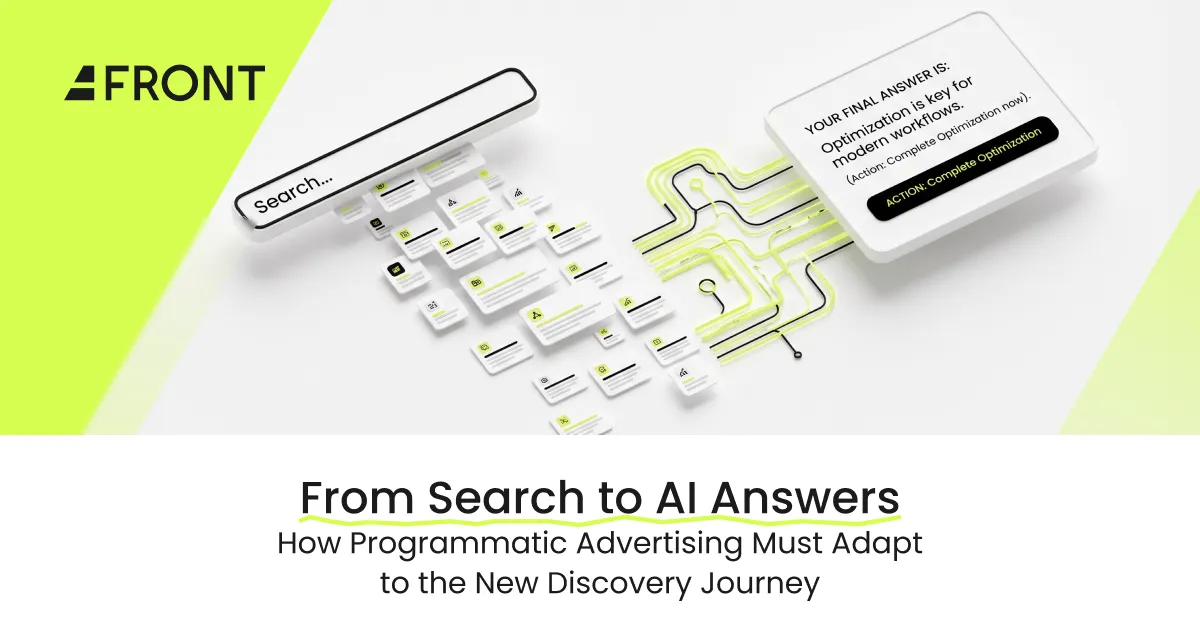
For years, digital discovery followed a familiar pattern. A consumer had a question, opened a search engine, scanned several links, visited a website, and continued exploring from there.
AI is changing that sequence.
People can now ask a detailed question and receive a synthesized answer immediately. They may refine it, compare options, ask follow-up questions, and move closer to a decision without opening ten browser tabs. A recent example is the partnership between Zocdoc and Gemini, which allows users to discover Zocdoc healthcare providers directly inside Gemini conversations.
For advertisers, this is bigger than another change to search. It changes where discovery happens — and programmatic advertising needs to respond.
Search Is Becoming a Conversation
Traditional search is built around keywords and links. AI discovery is built around questions, context, and follow-up questions.
That difference matters. Google has said that queries in its AI Mode are almost twice as long as traditional search queries, suggesting that users are bringing more complex needs into AI-powered discovery environments. Google has also been expanding advertising into AI-powered search experiences.
A person might once have searched “best running shoes.” An AI interaction can become much more specific: “What running shoes should I consider for daily training in hot weather if I mostly run on pavement?”
There is much more intent inside the second query.
For programmatic advertising, the opportunity is not simply to find a replacement for the search results page. It is to understand how these richer signals connect with the rest of the customer journey.
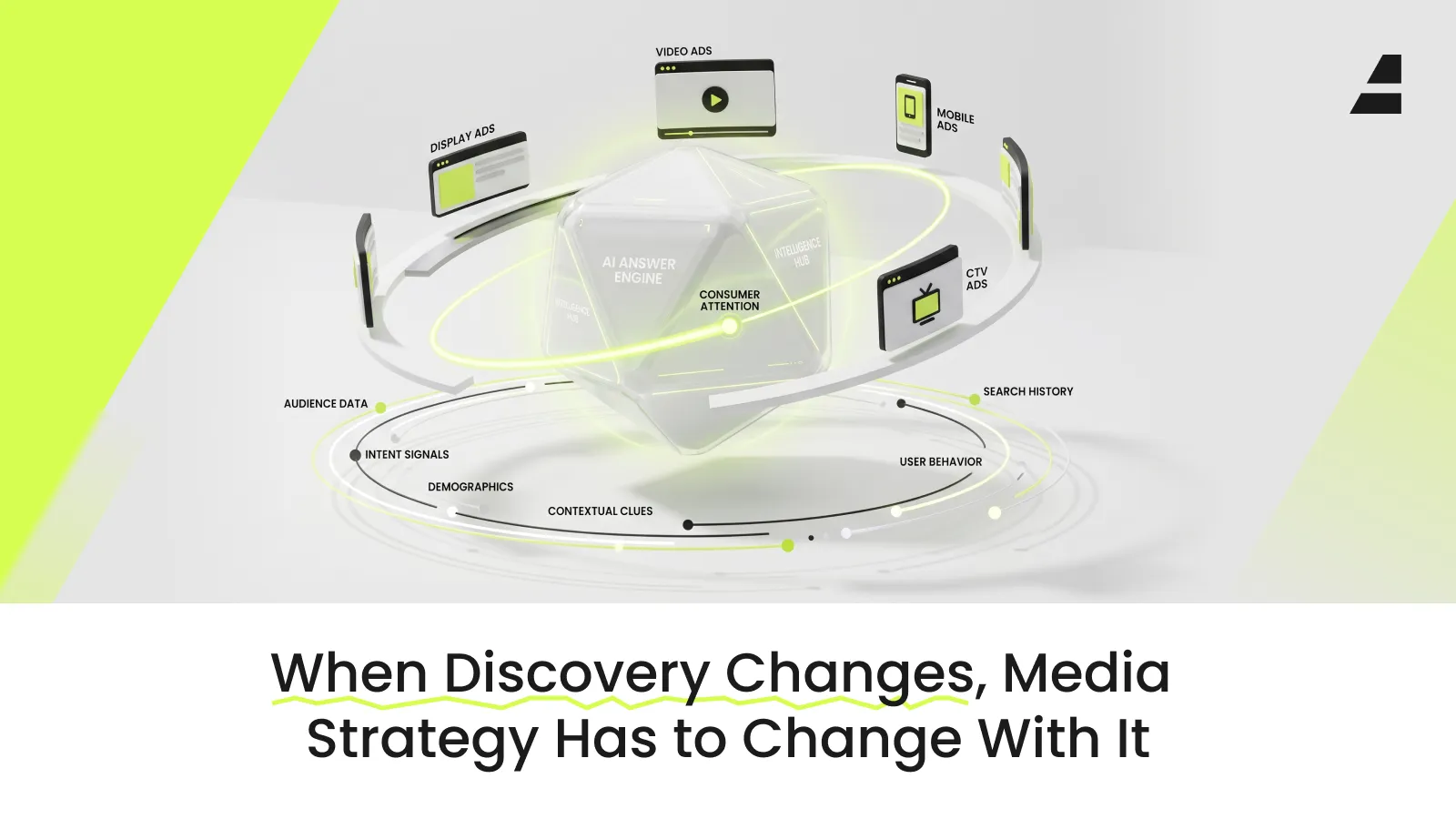
As AI changes where discovery begins, programmatic advertising helps brands stay connected across the media journey.
Discovery Is Spreading Across More Environments
Search is not disappearing. But it is becoming one part of a much wider discovery ecosystem.
Consumers discover products through AI assistants, streaming content, publisher websites, mobile apps, video, social environments, commerce platforms, and traditional search. AI assistants are beginning to connect some of these steps themselves. ADWEEK describes the Zocdoc–Gemini partnership as allowing users to find providers inside their chats — a useful example of discovery moving closer to action without requiring the familiar search-to-website journey.
This makes an omnichannel advertising strategy more important, not less.
A consumer could discover a category through an AI answer, encounter a brand through CTV later that evening, see a display ad the following morning, watch a video, and eventually convert. Treating each of those moments as an isolated channel misses how people actually make decisions.
At Afront, this is why omnichannel reach matters. Our platform helps advertisers connect with audiences across CTV, mobile, display, and video, combining advanced targeting with real-time insights and optimization.
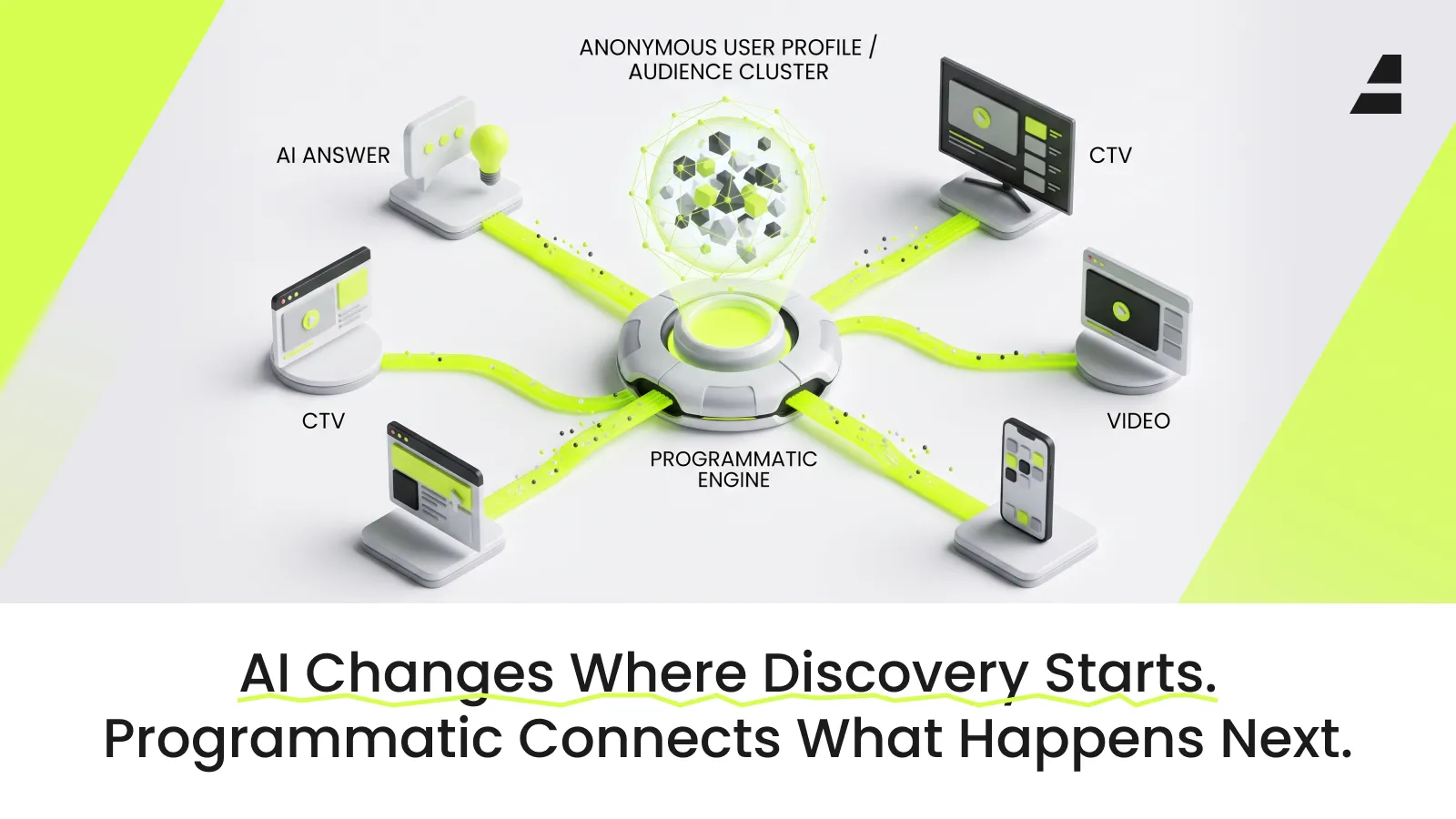
AI may change the starting point of discovery. Programmatic connects the audience journey across the channels that follow.
Programmatic Has to Read More Than Demographics
The changing discovery journey also makes simplistic audience definitions less useful.
Age, gender, and location still have value, but they rarely explain why somebody is interested in something right now. Context, behavior, device, browsing patterns, and intent can provide a much richer picture.
That becomes particularly important when discovery starts with conversational AI. Longer and more specific questions can reveal needs that traditional keyword journeys sometimes compress into two or three words.
Programmatic advertising does not need to know every detail about an individual. It needs enough relevant signals to make a better media decision.
Afront combines behavioral signals, browsing patterns, device usage, contextual intent, lookalike modeling, interest clustering, and moment-based targeting to help advertisers reach audiences when they are more likely to engage.
The distinction is important: more data is not automatically smarter targeting. Better interpretation is.
AI Answers Make Brand Discovery Less Predictable
There is another challenge. Brands have historically had relatively clear places to compete for discovery: search rankings, paid search positions, publisher inventory, social feeds, marketplaces.
AI answers can compress many sources into one response.
That changes the path between a consumer question and a brand interaction. It may also make brand visibility less predictable. Research reported by ADWEEK found that YouTube creator content appeared in more than 25% of AI-assistant answers studied, rising to nearly half in high-intent categories such as consumer electronics and financial services.
For marketers, that is a useful warning. Discovery can happen through sources and environments the brand does not directly control.
The response should not be to abandon performance advertising and chase every new AI surface. Brands still need reach, frequency, strong creative, quality inventory, and measurable outcomes.
What changes is the importance of being present across the journey rather than depending too heavily on one discovery channel.
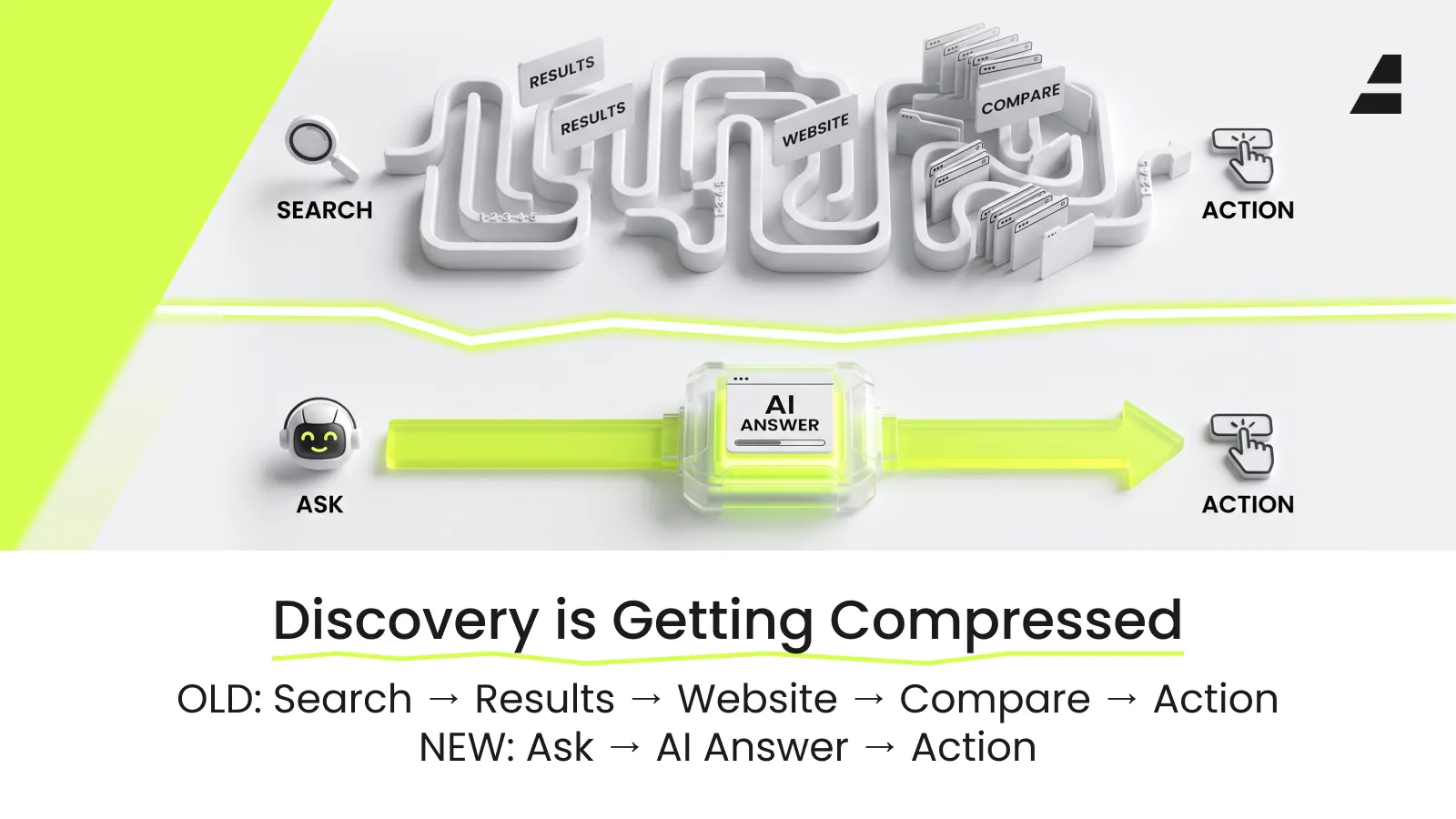
AI answer engines can compress discovery from multiple search and comparison steps into a much shorter path from question to action.
Programmatic’s Job Moves Further Down the Journey
If an AI assistant handles part of early research, programmatic advertising has an important job immediately after that moment.
Imagine someone researching a destination, financial service, electronics product, or new car through an AI assistant. That interaction may create interest, but interest alone does not guarantee action. The consumer continues watching, reading, browsing, comparing, and moving between screens.
Programmatic can keep the brand present through those next moments.
CTV can build awareness in a high-impact environment. Video can explain. Display can reinforce the message and drive traffic. Mobile can reconnect with consumers closer to action. The value comes from coordinating those interactions instead of buying them as unrelated impressions.
Afront supports multi-format advertising across CTV, video, display, and interstitial environments, with real-time optimization designed to improve campaign performance as signals change.
Real-Time Optimization Becomes More Valuable
A less predictable discovery journey creates another practical problem: marketers cannot assume in advance which combination of audience, environment, creative, and timing will perform best.
That makes real-time feedback much more useful.
Programmatic systems can evaluate performance as campaigns run, shift spend toward stronger opportunities, and reduce exposure where results are weak. Machine learning can help process behavioral, geographic, device, time, and other signals at a scale that manual media buying cannot realistically match. Afront combines machine-learning targeting with real-time statistics and campaign optimization for precisely this reason.
AI may be changing how consumers find information. It is also raising the standard for how quickly advertising systems respond to that behavior.
The media plan cannot remain static while the discovery journey becomes dynamic.
Retail Media Is Already Showing the Same Shift
A similar pattern is visible in commerce. Retail media is moving beyond retailer websites into offsite inventory, CTV, and broader omnichannel environments. Commerce data and programmatic activation are increasingly meeting outside the traditional digital storefront.
That shift offers a useful parallel to AI discovery: valuable consumer signals are escaping the environments where marketers historically expected to find them.
For a deeper look at that change, read our previous article on how retail media is moving off the retailer’s website — and whether programmatic is ready.
The Discovery Journey Changed. Media Buying Has To Follow.
The move from search results to AI answers does not make programmatic advertising less relevant. It makes its role broader.
Discovery can begin in an AI conversation and continue across CTV, video, publishers, apps, and other digital environments. Advertisers therefore need to think less about owning one isolated moment and more about staying relevant as consumers move between them.
The winning question is not simply, “Where did the customer search?”
It is: “Where does the customer go next?”
Afront helps advertisers reach audiences across the digital journey with advanced targeting, omnichannel activation, premium formats, real-time optimization, and transparent performance insights. Its broader platform reaches more than 300 million unique users and delivers more than 2 billion monthly ad impressions across 150+ countries.
Ready to adapt your media strategy to the new discovery journey? Talk to the Afront team.
