
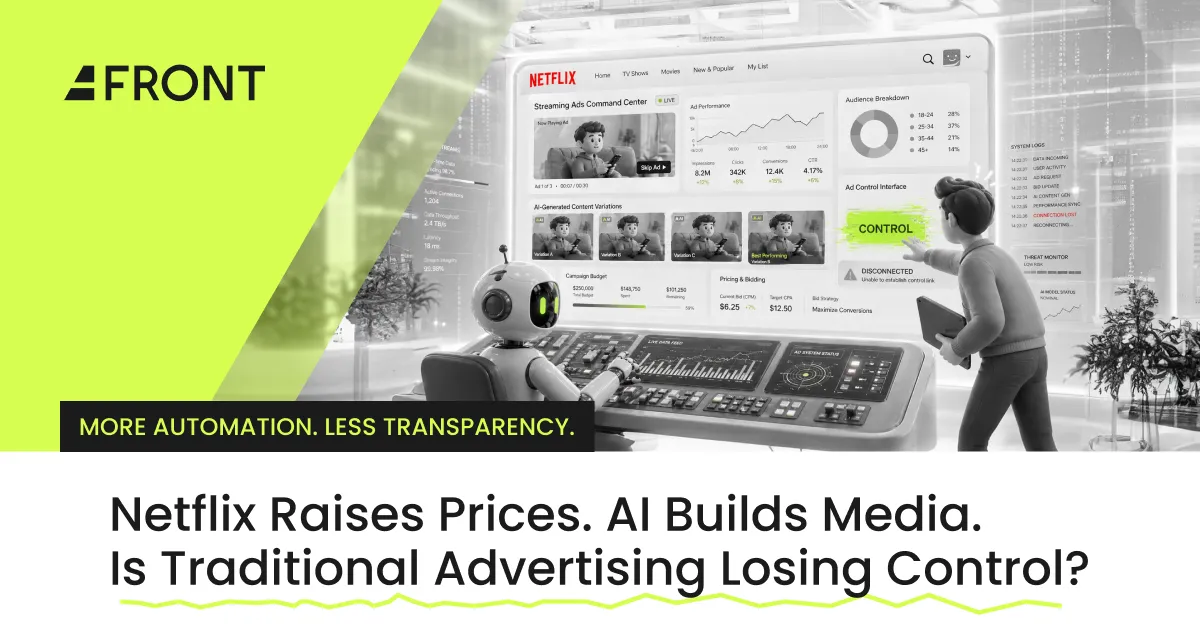
Programmatic advertising was built around one idea: more technology should create more efficiency.
For a while, it did.
Automation accelerated campaign execution. AI improved targeting. Streaming platforms transformed how audiences consumed content. Advertisers gained access to more inventory, more data, and more channels than ever before.
But the industry is changing again.
Netflix is raising subscription prices while continuing to scale its advertising business. AI-generated media is flooding the internet faster than humans can verify it. Algorithms increasingly decide what users see, what advertisers buy, and how budgets are distributed.
At the same time, marketers are asking a difficult question:
Are advertisers still controlling performance — or simply reacting to systems they no longer fully understand?
The shift is bigger than pricing updates or new AI tools. It reflects a deeper transformation happening across digital advertising.

AI automation is changing programmatic media buying — but transparency still matters.
The Media Landscape Is Becoming Fully Algorithmic
Modern media is no longer built manually.
Recommendation engines decide which shows users watch. AI tools generate content, optimize creatives, and predict engagement patterns in real time. Automated systems influence bidding strategies, audience targeting, and campaign pacing.
The speed is impressive. The transparency is not.
As automation expands, many advertisers are losing visibility into how optimization decisions are actually made. Performance often improves on dashboards while clarity disappears behind black-box systems.
This creates a dangerous imbalance.
More automation does not automatically mean more control.
In many cases, it creates more dependency on platforms advertisers cannot fully audit.
That is becoming increasingly visible in streaming media.
Netflix’s pricing changes highlight how valuable premium attention has become. As competition for audiences intensifies, platforms are pushing toward higher monetization efficiency while advertisers compete for shrinking moments of engagement.
The result is a market where attention is expensive, fragmented, and increasingly controlled by AI-driven ecosystems.
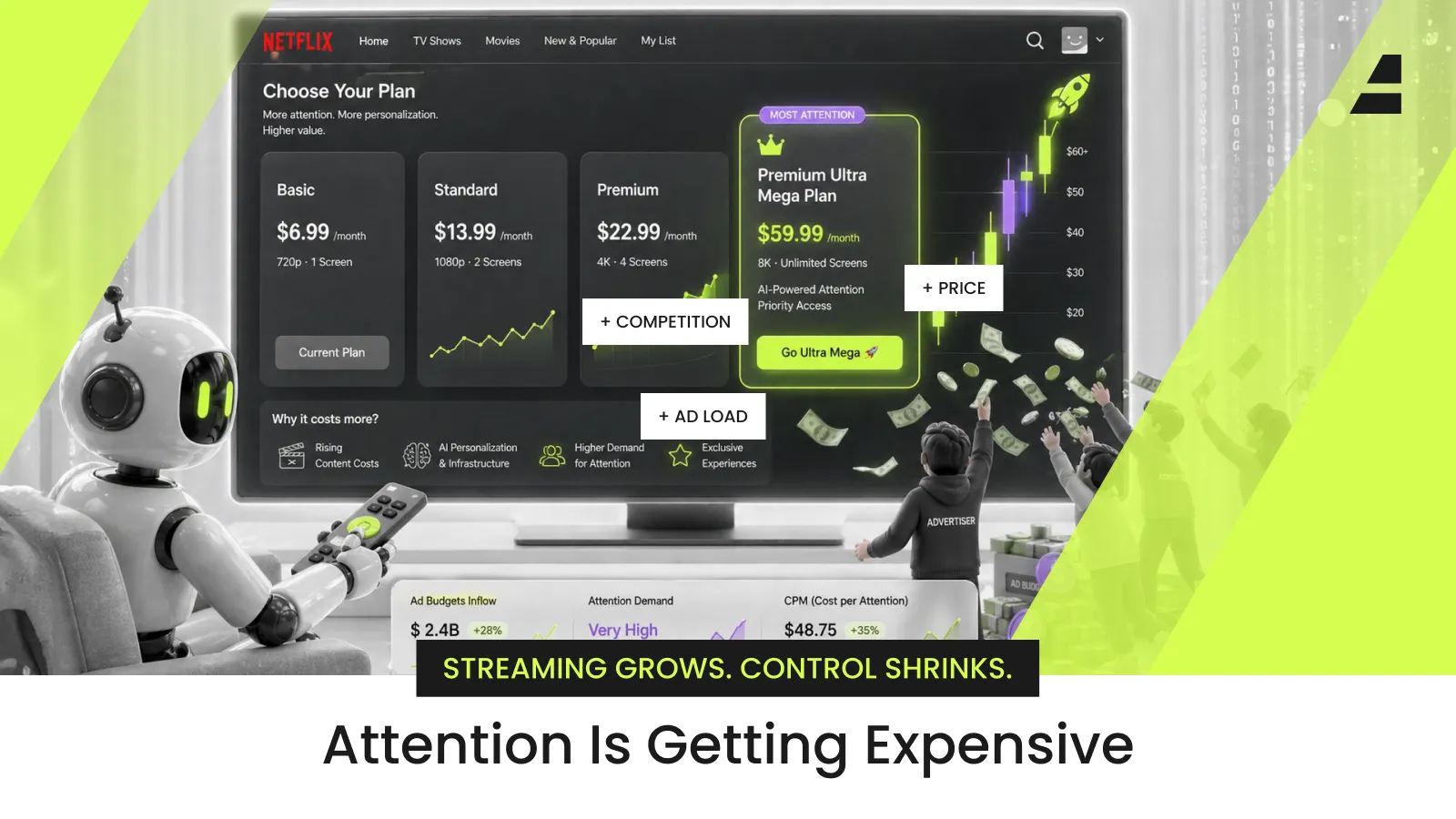
As streaming competition grows, attention becomes more expensive for advertisers.
Performance Is Replacing Presence
For years, digital advertising rewarded scale.
More impressions. More placements. More reach.
But advertisers are starting to realize that visibility alone does not guarantee outcomes.
A campaign appearing everywhere can still fail to drive meaningful engagement or revenue.
This is why programmatic strategy is shifting away from channel-first execution and toward outcome-driven advertising.
Brands no longer want fragmented campaigns spread across disconnected environments. They want measurable business impact.
They want transparency into where budgets go.
They want to understand why algorithms make certain optimization decisions.
And increasingly, they want partners that simplify complexity instead of adding more layers to it.
This is exactly where modern programmatic platforms are evolving.
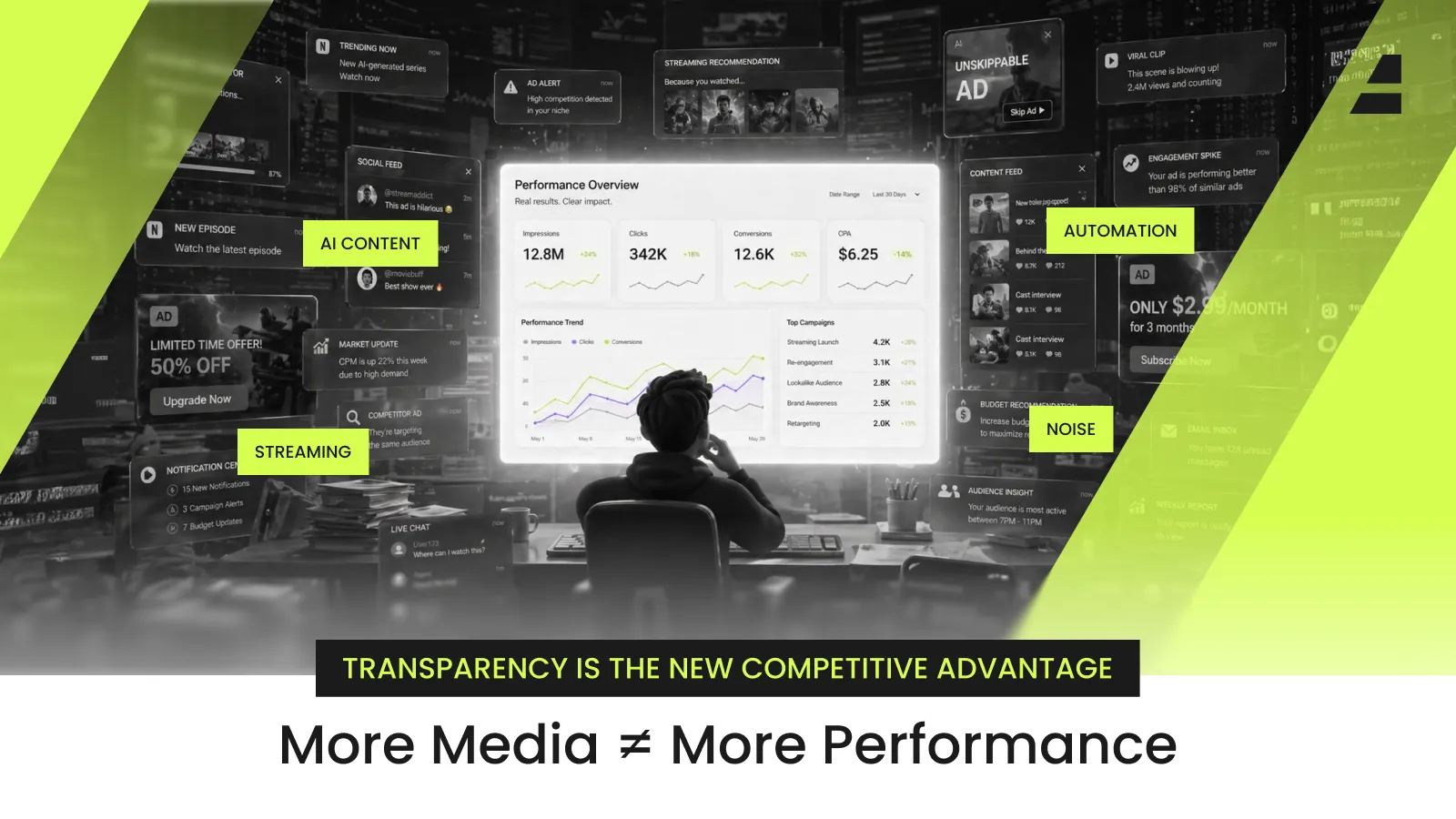
More automation doesn’t always mean better programmatic performance.
The Future of Advertising Will Belong to Transparent AI
AI is not replacing advertising. It is reshaping how advertising works.
The real question is whether advertisers will use AI strategically — or become dependent on opaque systems optimized around platform interests instead of advertiser outcomes.
This is where transparency becomes critical.
At Afront, we believe modern advertising should combine automation with visibility, not replace one with the other.
AI should accelerate optimization while still giving advertisers full clarity into performance, supply paths, targeting logic, and media quality.
That philosophy shapes how Afront approaches programmatic execution across CTV, video, display, and mobile environments.
Your Digital Future, Powered from the Forefront.
Afront helps advertisers, publishers, and agencies scale campaigns through transparent, performance-driven programmatic solutions designed around measurable outcomes rather than vanity metrics.
Because the future of advertising will not belong to companies with the most automation.
It will belong to companies that combine intelligent technology with accountability.
Why Transparency Is Becoming a Competitive Advantage
As media ecosystems become more fragmented, trust is becoming more valuable.
Advertisers are increasingly questioning hidden fees, duplicated supply paths, inflated metrics, and unclear optimization logic. Privacy regulations are tightening while third-party cookies continue disappearing.
In this environment, clarity matters more than ever.
Afront is built around that principle.
Our platform delivers over 2 billion monthly impressions across 300 million unique users and more than 150 countries while maintaining full transparency into campaign performance, media quality, and optimization.
No fuzzy math. No hidden layers. No “trust us” reporting.
Just measurable performance supported by real-time insights and advanced optimization technology.
This approach is especially important in omnichannel advertising, where campaigns now span CTV, mobile, display, video, and emerging digital environments simultaneously.
Without unified visibility, complexity grows faster than performance.
That is why advertisers are increasingly prioritizing platforms that connect channels, simplify workflows, and optimize toward business outcomes rather than isolated metrics.
Advertising Is Entering Its Most Important Reset Yet
The next era of digital advertising will not be defined by who has access to the most inventory.
It will be defined by who can deliver the clearest outcomes in the most transparent way.
AI-generated content will continue expanding. Streaming ecosystems will continue evolving. Automation will become even more sophisticated.
But advertisers still need control. They still need accountability. And they still need partners capable of turning fragmented media into measurable business growth.
At Afront, we believe programmatic advertising should feel smarter — not more confusing.
That means transparent reporting, premium inventory, advanced targeting, creative-first execution, and optimization systems advertisers can actually understand.
Because in a world increasingly controlled by algorithms, clarity becomes performance.
And performance becomes the competitive advantage.
Still relying on black-box optimization, unclear reporting, or fragmented DSP workflows?
Before choosing your next programmatic partner, make sure you’re asking the right questions.
In our previous article “5 Questions Every Advertiser Should Ask Before Choosing a DSP”, we break down the five critical things every advertiser should evaluate before selecting a modern DSP — from transparency and optimization to measurable performance and media quality.
Ready to Move Beyond Black-Box Advertising?
If you are looking for transparent programmatic solutions built around performance, visibility, and real business outcomes — Afront is ready to help.
From CTV and video to omnichannel programmatic strategy, our team helps brands scale smarter across the modern digital ecosystem. Contact Afront.
