
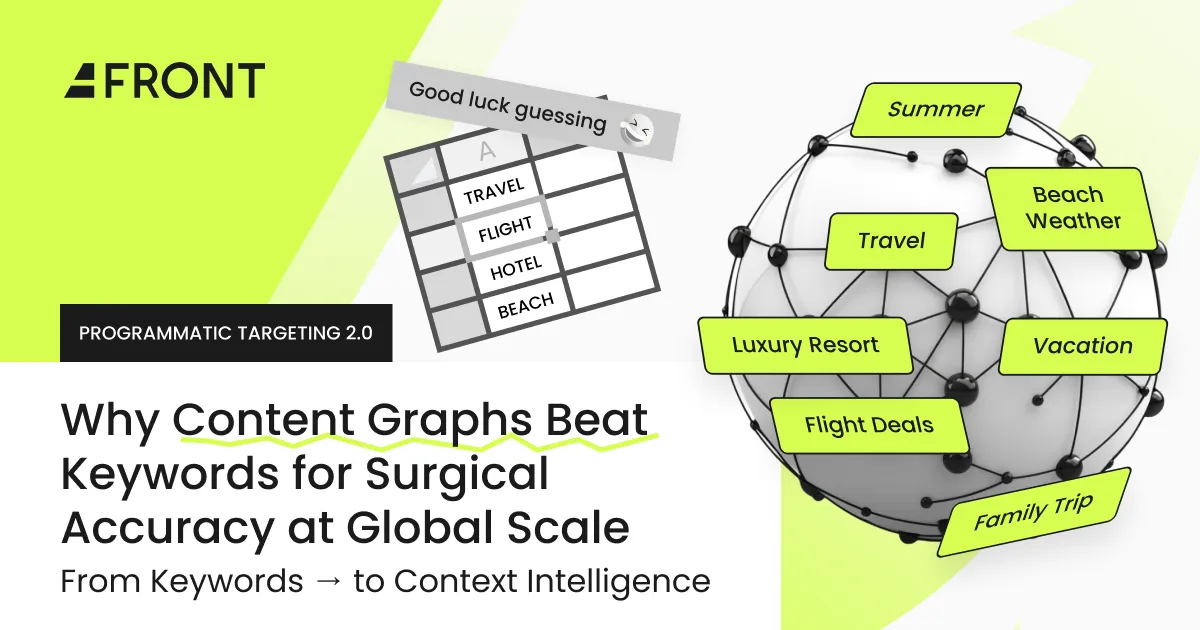
Keyword targeting has been one of the most common tools in programmatic advertising. Marketers used keywords to define safe environments, shape contextual signals, and guide brand messaging. But as digital ecosystems have evolved, keyword targeting has begun to show its limits. Today’s media landscape is faster, more dynamic, and far more complex than a simple list of words can capture.
The rise of content graphs marks a major shift toward deeper contextual understanding. Instead of matching ads to isolated keywords, modern targeting systems analyze relationships between content, intent, audience behavior, and media environments. The result is a more precise and scalable approach to reaching users without sacrificing brand safety or performance.
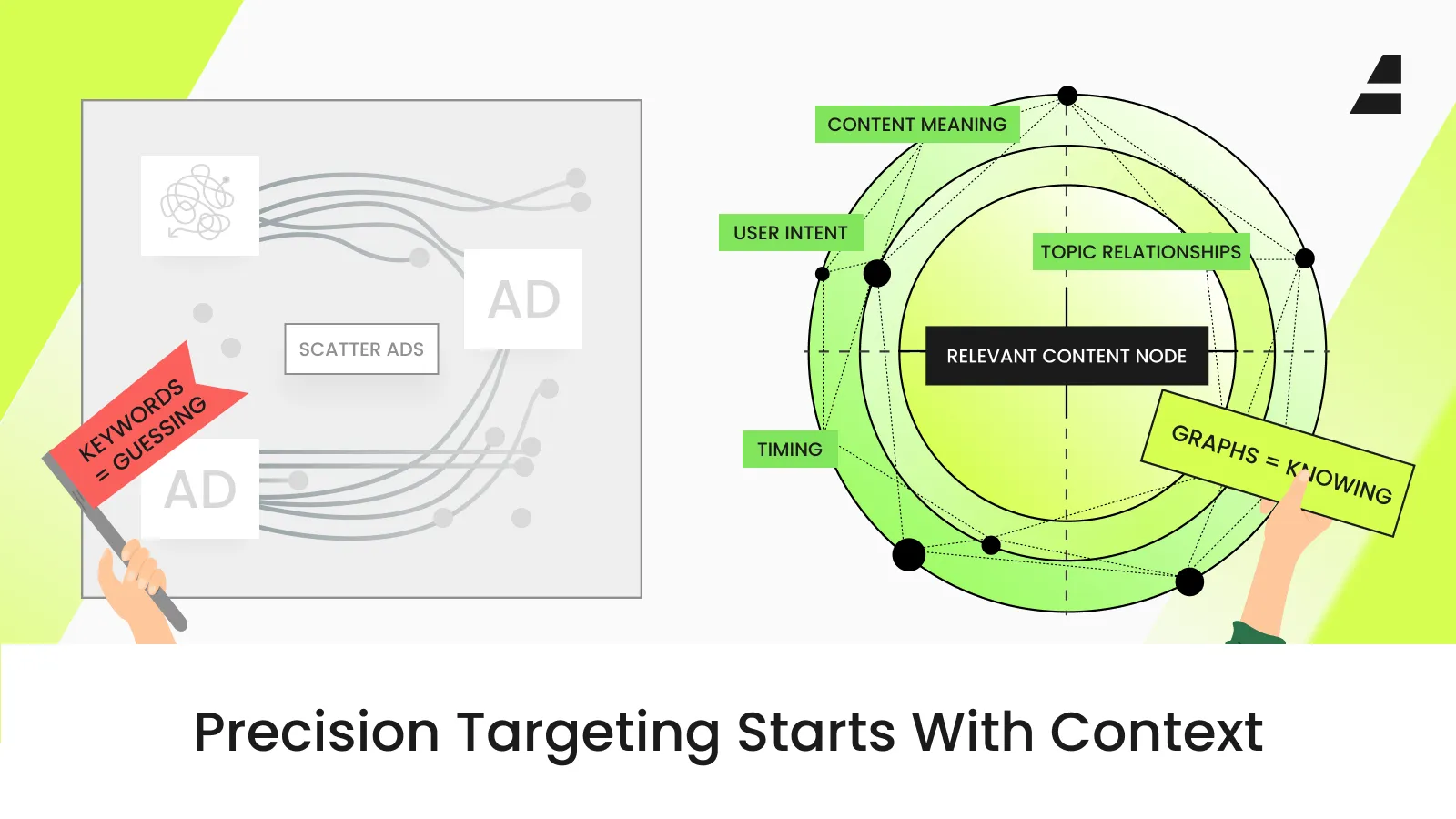
Content graphs replace keyword guessing with contextual intelligence, connecting user intent, meaning, and timing to pinpoint the exact moment an ad matters.
The End of Spray and Pray
Keyword targeting once promised control, but it often delivered blunt results. Blocking or targeting based on a single term could exclude valuable inventory or allow ads to appear in environments that felt misaligned with brand messaging. As programmatic advertising grew more sophisticated, brands began to recognize that keyword-based logic was too rigid for modern campaigns.
Industry conversations highlight how advertisers are moving away from keyword-only strategies toward richer contextual frameworks that analyze content holistically. Instead of filtering environments with static lists, content graphs map connections between topics, sentiment, and audience behavior, allowing campaigns to operate with far greater nuance.
At Afront, this transition reflects our belief in precision at scale. No more spray and pray. Targeting must evolve beyond basic filters and toward intelligent systems that understand meaning, context, and user intent.
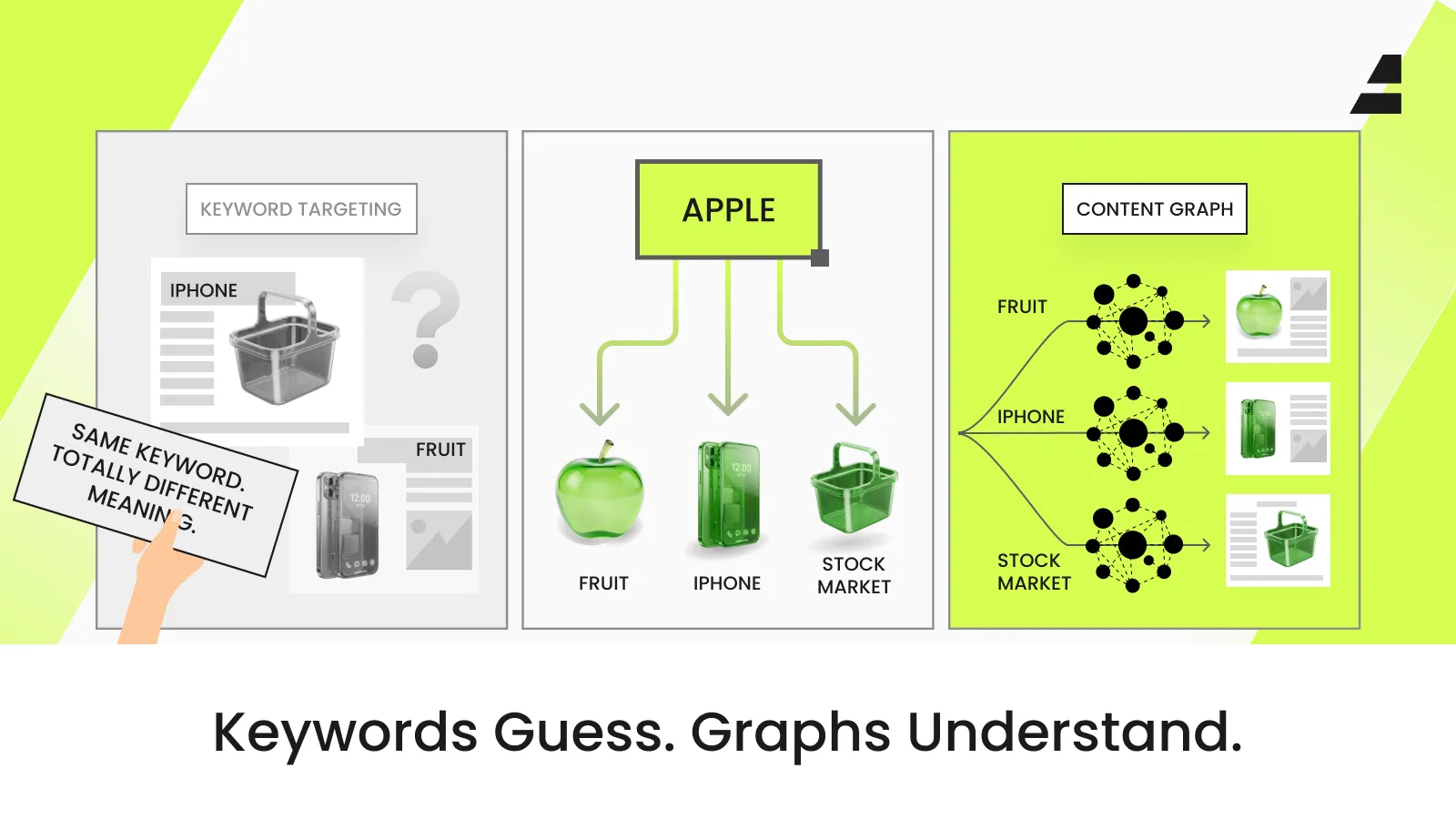
While keywords see the same word everywhere, content graphs understand the context behind it.
Behavioral vs Contextual: Finding the Right Screen at the Right Time
The next phase of programmatic advertising is not about choosing between behavioral data and contextual signals. It is about blending both into a unified targeting model.
Behavioral data reveals patterns in user activity, while contextual signals provide insight into the environment where engagement happens. Content graphs bring these layers together by grouping signals into intent-based clusters. Instead of targeting users because they once searched for a product, campaigns can reach audiences in moments when content context and behavioral patterns align.
Afront’s algorithmic targeting engine operates on this principle. By analyzing real-time behavior, device signals, and contextual intent, we help brands identify the right screen at the right moment. This approach ensures that advertising feels relevant rather than intrusive,
increasing engagement while maintaining strong brand safety standards.
Precision targeting is no longer about guessing what users might want. It is about interpreting signals in real time and delivering messages where they resonate most.
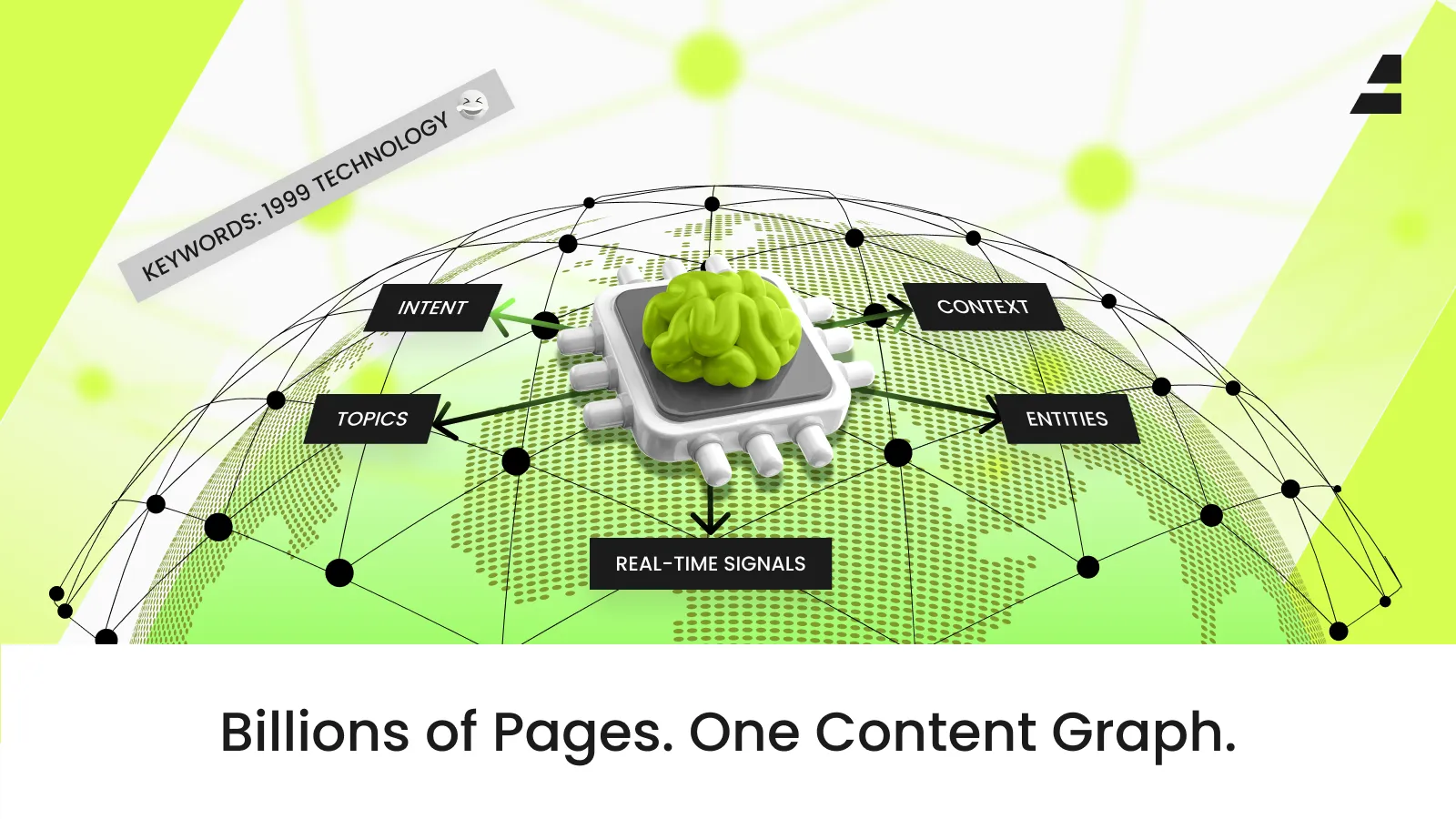
AI turns billions of pages and signals into a single content graph that reveals real audience intent across the digital ecosystem.
Omnichannel Precision Powered by Content Signals
Modern consumers move seamlessly between streaming platforms, mobile apps, and audio environments. Traditional keyword strategies struggle to maintain consistency across these channels because content structures vary widely. A keyword that works in display advertising may not translate effectively to CTV or audio inventory.
Content graphs solve this challenge by creating a unified understanding of content signals across formats. By mapping relationships between topics and environments, advertisers can maintain consistent messaging across CTV, video, display, and audio without losing contextual relevance.
Afront’s omnichannel approach is built around this philosophy. Whether it is a high-impact CTV placement or a short-form video format, our platform uses advanced AI and audience segmentation to ensure that campaigns remain cohesive across touchpoints. This level of coordination strengthens brand recognition while improving performance outcomes.
For advertisers, omnichannel precision means fewer disconnected impressions and more meaningful interactions throughout the customer journey.
The Efficiency Dividend: Reducing Wasted Impressions
One of the most significant benefits of content graph targeting is efficiency. Traditional keyword strategies often lead to overblocking or misaligned placements, which increases wasted impressions and reduces return on ad spend. When targeting becomes more precise, campaigns naturally become more efficient.
Content graphs allow advertisers to focus budgets on high-intent environments rather than broad keyword categories. By understanding context more deeply, platforms can optimize delivery toward placements that drive engagement and measurable outcomes.
At Afront, efficiency is central to everything we do. Our machine-learning models analyze performance signals continuously, adjusting targeting logic in real time to reduce waste and maximize impact. With access to over 300 million unique users and more than two billion monthly impressions across 150+ countries, Afront delivers global scale without compromising precision.
The result is a smarter allocation of media spend, where each impression contributes to meaningful performance instead of simply increasing volume.
Why Content Graphs Align with the Future of Programmatic
The shift from keywords to content graphs reflects a broader transformation in advertising infrastructure. As AI becomes embedded in media buying, systems need richer contextual signals to make smarter decisions. Static targeting rules cannot keep up with the complexity of modern digital environments.
Content graphs enable dynamic targeting that adapts to evolving content trends, audience behavior, and market conditions. This flexibility allows brands to stay relevant while maintaining strong safety standards.
Afront’s frontline technology combines AI-driven optimization with creative-first strategy, ensuring that campaigns do more than reach audiences — they engage them. Visibility that matters is no longer defined by impression count alone. It is measured by how effectively each interaction drives real outcomes.
If you want to explore how publishers can adapt their inventory strategy to meet these new targeting expectations, read our previous deep dive: Why Media Owners Must Position Inventory Like Performance Marketers
Turning Precision Into Performance
The evolution of programmatic advertising is moving toward intelligent systems that understand context as deeply as they understand data. Content graphs represent a major step forward in this journey, enabling brands to connect with audiences in ways that feel relevant, safe, and scalable.
At Afront, we empower advertisers, publishers, and agencies to stand out through advanced technology, creative excellence, and transparent performance metrics. Our multi-format platform ensures that your message appears in premium environments where it can truly perform.
Don’t just reach audiences. Reach the right moments. Bring your campaigns to the forefront — where precision meets performance.
